
A fall in organic traffic can feel urgent, but changing every page at once makes the cause harder to understand. The first job is to identify what fell, where it fell, and when it started.
This guide explains how a business owner can prepare a focused SEO traffic investigation before commissioning fixes. It does not promise a recovery date or assume that every decline is caused by a search algorithm update.
1. Define the decline before diagnosing it
Write a precise problem statement. “Website traffic is down” is too broad. A better example is: “Google organic clicks to our main service pages fell during the last four weeks, compared with the previous four weeks.” This is an illustration, not a result from a Vashu Tech client.
Keep lead volume, analytics sessions, and Search Console clicks separate. They measure different things. If enquiries have fallen while search clicks are steady, the investigation should also include forms, contact routes, and changes to the offer.
2. Compare useful date ranges
Use complete periods with similar weekday coverage. Check a longer view as well as the recent change, and consider a year-over-year comparison when the business is seasonal. A short period can exaggerate a quiet weekend or a temporary fluctuation.
Confirm that the reporting property, search type, country, and device filters match between comparisons. Save the filters alongside the findings so someone else can reproduce the analysis.
3. Find the pages and queries behind the loss
In Search Console, examine which pages and queries lost clicks and impressions. Separate a decline affecting a few articles from one affecting most of the site. Compare branded searches with searches for services or problems.
Google's traffic-drop documentation recommends comparing affected queries and using Google Trends to examine wider demand. This helps distinguish a possible site issue from a change in how often people search for the topic.
- One page affected: review its recent edits, purpose, and competing results.
- One page template affected: examine shared navigation, rendering, and metadata changes.
- Most pages affected: review site availability, indexing signals, and major releases.
These patterns guide the next check; they do not prove a cause by themselves.
4. Review clicks and impressions together
Clicks represent visits from search results, while impressions record appearances in those results. Click-through rate is clicks divided by impressions. Review these alongside position rather than treating a single metric as the whole story.
For example, steady impressions with fewer clicks calls for a different investigation from a broad loss of impressions. Check the actual queries and pages before rewriting titles. Avoid making a title more dramatic if that would misrepresent what the page delivers.
5. Build a timeline of website changes
Ask the developer and marketing team for recent releases and content changes. Record domain or URL changes, redirects, deleted pages, navigation updates, template changes, and tracking edits. Include outages if they are known.
Inspect a small sample of affected URLs. Confirm that each page loads, contains the intended content, and has the expected indexability and canonical settings. Where a URL changed, test the redirect and its destination. For a broader review, use our technical SEO checklist for business websites.
6. Separate observations from explanations
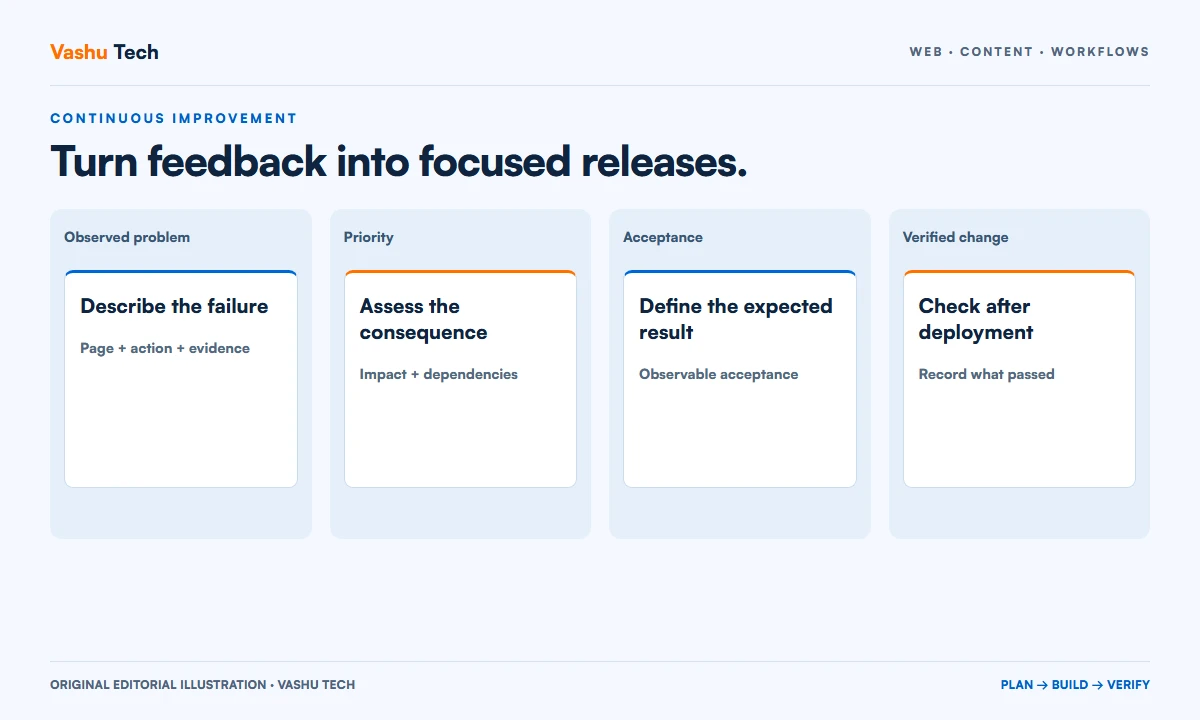
Use a short evidence log with three fields: observation, possible explanation, and next check. “The service page lost impressions after a URL change” is an observation with timing. “The redirect caused the loss” remains a hypothesis until the redirect and indexing evidence support it.
This distinction prevents expensive work based only on coincidence. It also makes communication between a business owner, SEO specialist, and developer clearer.
7. Fix the strongest issue and measure the result
Prioritize verified faults that block access or remove important content. For editorial work, explain which user need is missing and how the proposed change addresses it. Avoid bulk edits that make it impossible to connect a result to a specific change.
Record what changed and when. Agree on a review period appropriate to the issue, then check the same affected pages and queries again. Search performance can vary, and no single adjustment guarantees rankings or leads.
What to send an SEO specialist
- The affected URLs and the date the decline began.
- Comparable reporting periods and active filters.
- A summary of lost clicks, impressions, and business enquiries.
- A timeline of releases, migrations, and significant content edits.
- Known issues and changes already attempted.
This focused brief is more useful than an unexplained export of hundreds of metrics. If the site recently changed, also read what to review before a website redesign.
Need help organizing the investigation? Contact Vashu Tech with your affected pages and a summary of the decline so the review scope can be discussed.
References
Google Search Central: Debugging drops in Google Search traffic and Google Search Central: Search Console performance data.