
Requirements first
An expanding plugin collection can create conflicts between checkout, stock handling and storefront behaviour.
WooCommerce development adds store operations to WordPress while retaining its content-management environment. The scope can include products, variations, order handling, supported payment extensions and storefront templates. It suits businesses that need a WordPress-centered store and can maintain its hosting and extensions. A project should define the catalog and operational workflow before selecting plugins.
A clear scope, practical review points and communication around your actual requirements.
An expanding plugin collection can create conflicts between checkout, stock handling and storefront behaviour.
For WooCommerce Development, agree content ownership, access, approvals and the person who handles questions throughout the project.
Hosting resources, extension licences and update compatibility affect ongoing operation. Payment providers need account approval. Backups and staging checks should cover both WordPress content and store records.
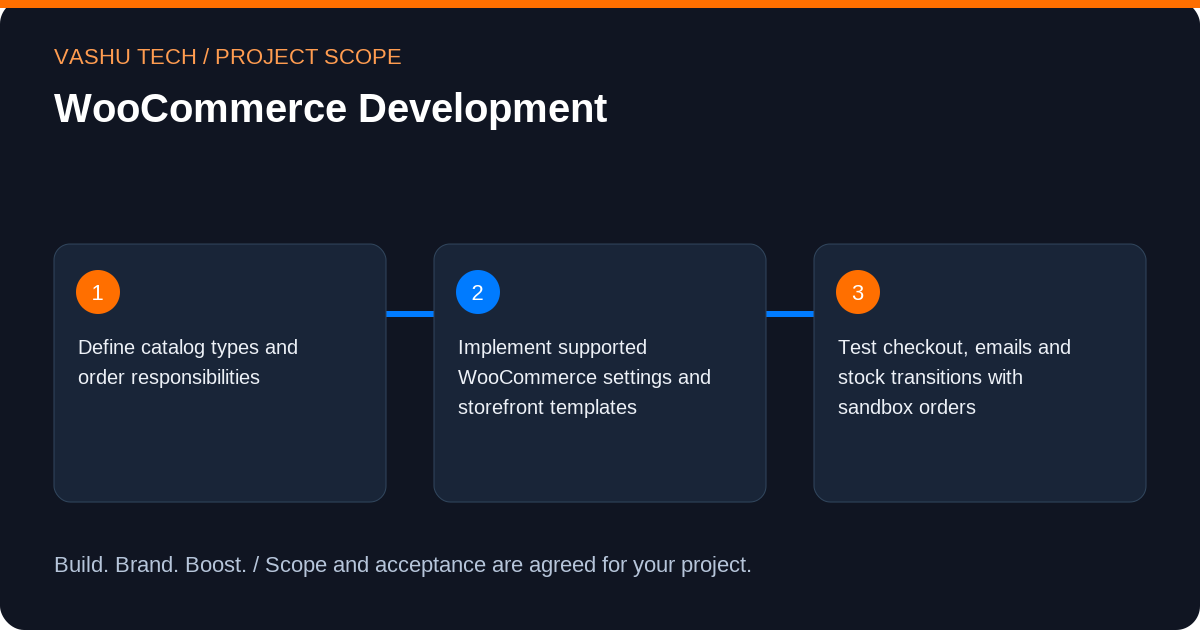
Use the WooCommerce Development tasks as acceptance criteria: Define catalog types and order responsibilities; Implement supported WooCommerce settings and storefront templates; Test checkout, emails and stock transitions with sandbox orders.
Choose the work relevant to your starting point. Final deliverables are agreed in your proposal.
For WooCommerce Development, this stage covers define catalog types and order responsibilities. Agree the necessary inputs, intended output and review criteria before work starts.
For WooCommerce Development, this stage covers implement supported WooCommerce settings and storefront templates. Agree the necessary inputs, intended output and review criteria before work starts.
For WooCommerce Development, this stage covers test checkout, emails and stock transitions with sandbox orders. Agree the necessary inputs, intended output and review criteria before work starts.
An expanding plugin collection can create conflicts between checkout, stock handling and storefront behaviour.
Hosting resources, extension licences and update compatibility affect ongoing operation. Payment providers need account approval. Backups and staging checks should cover both WordPress content and store records.
Check the agreed WooCommerce Development scope against representative examples. Confirm what is delivered, who maintains it and which follow-up tasks are separate.
Five practical stages from initial brief to reviewed handover.
Share the current situation, priority audience and the issue this WooCommerce Development work should address.
Confirm define catalog types and order responsibilities, required inputs, dependencies and the agreed review points.
Carry out the approved scope, including implement supported WooCommerce settings and storefront templates, with changes reviewed against the brief.
Review product information, variants, cart behaviour, checkout and order responsibilities relevant to the agreed store scope.
Confirm acceptance of the WooCommerce Development deliverables, ownership, documentation and any separately agreed ongoing support.
Confirm the included outputs before implementation; optional work is identified separately.
A written WooCommerce Development brief covering the audience, current situation and priority: an expanding plugin collection can create conflicts between checkout, stock handling and storefront behaviour.
Define catalog types and order responsibilities; Implement supported WooCommerce settings and storefront templates; Test checkout, emails and stock transitions with sandbox orders.
Review product information, variants, cart behaviour, checkout and order responsibilities relevant to the agreed store scope.
Hosting resources, extension licences and update compatibility affect ongoing operation. Payment providers need account approval. Backups and staging checks should cover both WordPress content and store records.
Check the agreed WooCommerce Development tasks using real or approved representative examples, including relevant failure cases.
Confirm who maintains the result, how access is handed over and which improvements or support are outside the initial WooCommerce Development agreement.
Choose the checks relevant to your WooCommerce Development project; no ranking or business result is promised.
Where WooCommerce Development affects public pages, organize accurate headings, service descriptions and useful links around the intended audience.
Review product information, variants, cart behaviour, checkout and order responsibilities relevant to the agreed store scope. Where applicable, include keyboard access, readable text and mobile interaction checks.
Agree how WooCommerce Development work is evaluated. Separate implementation evidence from traffic, enquiries or sales, and configure analytics only where approved.
Discuss how WooCommerce Development fits your audience, workflow and operational requirements.
WooCommerce development connects WordPress content with store operations.
The catalogue and checkout need coordinated configuration.
Conflicting extensions can disrupt otherwise straightforward purchases.
Custom extension work needs an explicit scope.
Retained themes and plugins influence implementation choices.
An order should accurately preserve the purchased options.
Catalogue complexity affects effort alongside plugin compatibility.
Provide a store link and sample product information. Request a scoped quote or contact Vashu Tech about your WooCommerce implementation.
Choose the products required for the initial release.
Resolve variation and stock responsibilities early.
List the extensions your business must retain.
A merchant may sell variable products with shared descriptions.
Available options need consistent prices and stock information.
Try changing quantities and selecting unavailable variations.
Review payment failure messages and order status.
Show staff how the delivered product controls work.
Identify who handles refunds and exceptional orders.
Keep custom functionality understandable beyond a theme change.
Check whether an existing extension already supports the requirement.
Prepare product examples and approved fulfilment requirements.
Identify the person approving tax and invoice settings.
An established shop may need clearer variation selection.
Review the current template before replacing unrelated functionality.
Match test order quantities and totals to the basket.
Confirm that retained integrations still receive appropriate information.
Licences and payment-provider accounts require continuing ownership.
Catalogue maintenance and recurring support are separate decisions.
Audience, scope and coordination for WooCommerce Development.
Merchants launching or extending a WordPress shop.
Agreed catalogue features, checkout checks and merchant guidance.
Answers to help you plan the scope and next steps.
First inspect its theme, plugins and affected workflow. That review determines the suitable changes.
No. Check existing capabilities before adding another dependency.
The merchant supplies approved business requirements; the implementation follows those agreed settings.
Review the provider connector, merchant approval and compatibility with the installation.
Include relevant failure outcomes in the agreed checkout checks.
Continuing maintenance needs explicit inclusion and defined responsibilities.
Share your starting point and priorities. We can discuss the scope, required information and acceptance checks before providing an estimate.
Start a conversation
Send your requirements to our team. Please leave out passwords and confidential access details.