
API integration connects an application to a documented service interface. It includes authentication, input mapping, response validation and the behaviour when requests fail. The service is useful when a business needs reliable data exchange or an automated action between systems. A good design identifies the source of truth and distinguishes a completed action from a request that is still pending or uncertain.
Vashu Tech services
API Integration
API integration connects an application to a documented service interface. It includes authentication, input mapping, response validation and the behaviour when requests fail. The service is useful when a business needs reliable data exchange or an automated action between systems. A good design identifies the source of truth and distinguishes a completed action from a request that is still pending or uncertain.
Scope-ledYour requirements first
Clear estimatesBased on agreed work
Review pointsDefine acceptance checks
02
Understanding API Integration
Custom development is appropriate when a business has a defined workflow that ordinary website settings do not express well. The first step is to describe users, records, rules and exceptions. A staff application, external API connection and small website feature may require very different solutions. PHP and Laravel can provide a server-side foundation, but technology does not replace clear permission and validation requirements. Review existing code before deciding to modernize or rebuild it. Data ownership, deployment, backups and maintenance should form part of the project discussion.
03
Problems this work addresses
Repeated requests, timeouts and inconsistent responses can create duplicate records or leave staff unsure whether an external action completed.
04
Work stages and practical deliverables
These stages describe the discussion scope for this service. The proposal should identify which outputs are included, the information required from you and any work that belongs to a separate agreement. Review points should make it possible to check the result against the original requirement.
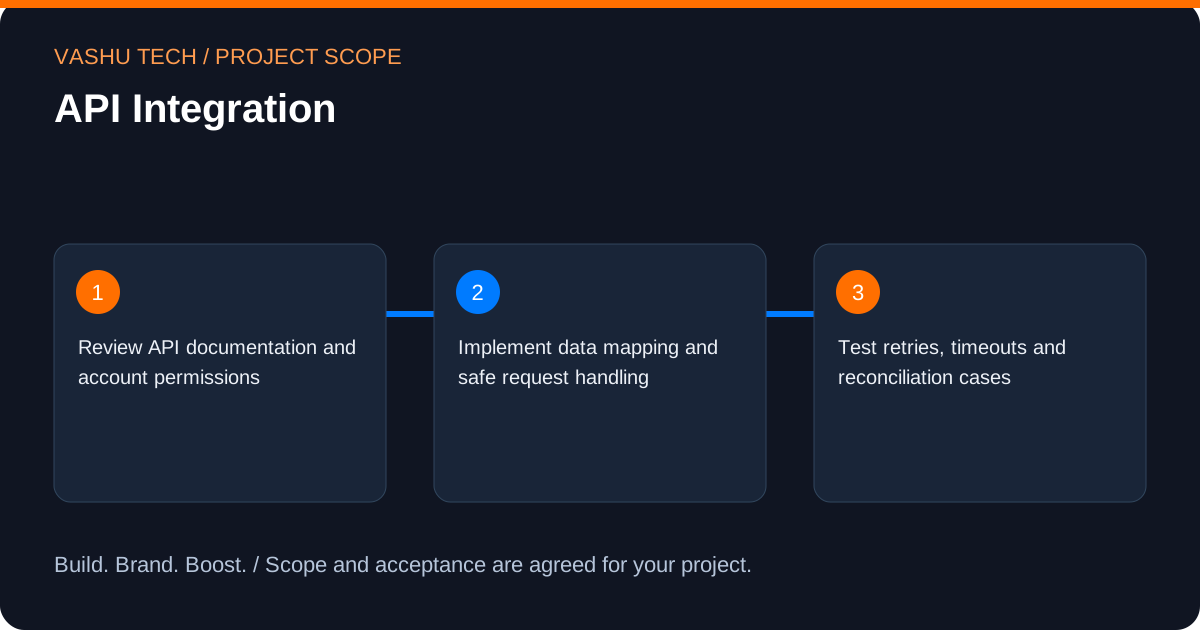
- Review API documentation and account permissions.
- Implement data mapping and safe request handling.
- Test retries, timeouts and reconciliation cases.
05
Technical considerations and boundaries
Provider rate limits, API versions and sandbox support affect feasibility. Tokens should not be exposed to browser clients unless the provider's design requires a safe public credential. Logging must avoid private payloads.
06
Business value and acceptance
The practical value is addressing this specific difficulty: repeated requests, timeouts and inconsistent responses can create duplicate records or leave staff unsure whether an external action completed. A useful result makes the relevant journey or operational responsibility clearer. Define the acceptance checks around test retries, timeouts and reconciliation cases, and distinguish an implemented improvement from an unverified business outcome.
07
Pricing, timing and handover
An estimate depends on the existing environment, the amount of content or data involved and the agreed testing and access requirements. External licences, hosting and vendor subscriptions should be identified separately. Share any deadline and its dependencies so that feasibility can be assessed; this page does not promise a fixed price or delivery date.
08
Discuss your api integration requirements
Describe the current situation and the change you need. A public website link and a short explanation are enough to begin; arrange sensitive access separately. Request a scoped quote or contact Vashu Tech to discuss the next step.
09
Plan your API Integration scope
Describe the users, records and decisions before choosing an implementation. A custom PHP or Laravel project needs clear rules for who may view or change information and what happens when an action cannot complete. Existing data, external systems and deployment constraints should be reviewed before a rebuild is proposed.
For API Integration, start by identifying the decision or workflow you want to improve. Repeated requests, timeouts and inconsistent responses can create duplicate records or leave staff unsure whether an external action completed. Select the tasks that address that requirement; the full category of work does not have to be included in every project.
Useful starting information includes a redacted workflow example, user roles, record types, existing application details and any available integration documentation. Public links and redacted examples are enough for an initial discussion. Account access can be arranged separately after the required permissions are understood.
10
A practical API Integration planning example
Consider a team that moves information between a website and a business system. The brief could define the source of truth, the staff actions that need permission checks and what a pending or failed transfer should look like. The implementation should follow those rules rather than merely adding another screen.
Translate that example into a small, testable brief for API Integration: begin with review API documentation and account permissions, identify the inputs needed to implement data mapping and safe request handling, and agree how to test retries, timeouts and reconciliation cases. This is an illustrative planning scenario, not a client case study or a promised result.
11
Review and acceptance for API Integration
Review permissions, input validation and representative failure cases. A demonstration using one administrator account does not show that other roles are protected. For integrations, discuss timeouts, duplicate requests and reconciliation; for migrations, agree how retained records and existing URLs will be checked.
Keep a short acceptance checklist alongside the proposal. For this scope, the review should include: Review API documentation and account permissions; Implement data mapping and safe request handling; Test retries, timeouts and reconciliation cases. Record what was checked, which items remain open and who can approve the result. An implemented change and a business outcome are different things; neither enquiries nor sales should be assumed from a technical demonstration.
12
Handover and ongoing decisions for API Integration
The handover can identify deployment requirements, configuration responsibilities, the main workflow rules and any agreed technical documentation. Account ownership, private credentials and future application maintenance should have named responsibilities.
Before handover, agree who owns the accounts, approves public information and handles future changes. Any maintenance, additional content, third-party subscription or ongoing campaign management should be listed explicitly in the proposal. Share an essential deadline early so dependencies can be discussed before a delivery schedule is agreed.
13
Planning the right fit
Audience, scope and coordination for API Integration.
Who this is for
Businesses evaluating API Integration for a new requirement or an existing website. Repeated requests, timeouts and inconsistent responses can create duplicate records or leave staff unsure whether an external action completed.
Scope and deliverables
Review API documentation and account permissions Implement data mapping and safe request handling Test retries, timeouts and reconciliation cases Scope, exclusions and acceptance evidence are agreed in the proposal.
14
Questions about API Integration
Answers to help you plan the scope and next steps.
What happens when the provider is unavailable?
The integration should have an agreed failure path, such as a queued retry or a visible pending state, rather than silently treating the action as complete.
What should I share for a API Integration enquiry?
Include the affected website or proposed project, the audience and the outcome you need. For this work, useful discussion points include review api documentation and account permissions, implement data mapping and safe request handling, test retries, timeouts and reconciliation cases. Do not send passwords in the public form.
What affects the cost and timing of API Integration?
The amount of existing work to inspect, the agreed deliverables, access readiness and testing requirements affect the estimate. Provider rate limits, API versions and sandbox support affect feasibility. Tokens should not be exposed to browser clients unless the provider's design requires a safe public credential. Logging must avoid private payloads. Ask for a scoped proposal rather than assuming a fixed package or completion date.
How is API Integration work checked?
Acceptance should reflect the actual requirement: review api documentation and account permissions; implement data mapping and safe request handling; test retries, timeouts and reconciliation cases. Check representative content and failure cases as well as the expected successful result. Agree the evidence and handover responsibilities before work begins.
What information helps scope API Integration?
Bring a redacted workflow example, user roles, record types, existing application details and any available integration documentation. Identify your priority and which tasks you need: Review API documentation and account permissions; Implement data mapping and safe request handling; Test retries, timeouts and reconciliation cases. Share public or redacted information first; arrange sensitive access separately.
What should be agreed at the handover for API Integration?
The handover can identify deployment requirements, configuration responsibilities, the main workflow rules and any agreed technical documentation. Account ownership, private credentials and future application maintenance should have named responsibilities. Confirm account ownership, approval responsibilities and any ongoing support separately from the initial work.
Discuss your requirements
Plan your API Integration project
Share your starting point and priorities. We can discuss the scope, required information and acceptance checks before providing an estimate.
Tell us about your project.
Send your requirements to our team. Please leave out passwords and confidential access details.