
Skip to content
info@vashutech.com +91 86278 82193 D-109, Phase 7, Industrial Area, Sector 73, Sahibzada Ajit Singh Nagar, Punjab 160055, India.
Vashu Tech — Build. Brand. Boost.

Web Design and Development

Vashu Tech services

Web Design and Development

A website project starts with the tasks visitors need to complete. Design explains the information and interactions; development makes those decisions work reliably. New websites, redesigns, focused landing pages and corrective work have different starting points. Share the existing site, intended audience and practical problem before choosing a solution. A focused bug fix should not become an unnecessary rebuild, while a new business website needs a coherent content structure rather than a collection of disconnected screens.

Scope-ledYour requirements first
Clear estimatesBased on agreed work
Review pointsDefine acceptance checks
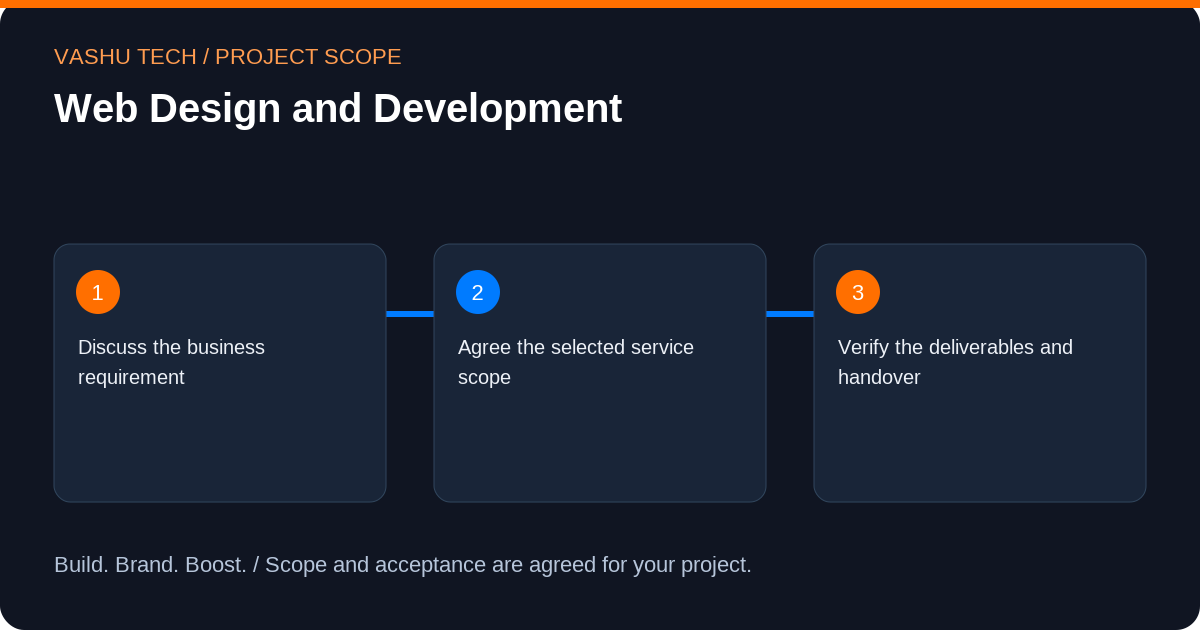
Web Design and Development project scope: Discuss the business requirement; Agree the selected service scope; Verify the deliverables and handover.
02

Why choose Vashu Tech for Web Design and Development?

A clear scope, practical review points and communication around your actual requirements.

Requirements first

A website project starts with the tasks visitors need to complete. Design explains the information and interactions; development makes those decisions work reliably. New websites, redesigns, focused landing pages and corrective work have different starting points. Share the existing site, intended a...

Defined responsibilities

For Web Design and Development, agree content ownership, access, approvals and the person who handles questions throughout the project.

Platform-aware planning

For Web Design and Development, agree account ownership, existing platform constraints, dependencies and review criteria before implementation.

Review before handover

Use the Web Design and Development tasks as acceptance criteria: Plan page structure and visitor journeys; Design responsive pages and implement required features; Review navigation, accessibility and contact flows.

03

Web Design and Development service scope

Choose the work relevant to your starting point. Final deliverables are agreed in your proposal.

Plan page structure and visitor journeys

For Web Design and Development, this stage covers plan page structure and visitor journeys. Agree the necessary inputs, intended output and review criteria before work starts.

Design responsive pages and implement required features

For Web Design and Development, this stage covers design responsive pages and implement required features. Agree the necessary inputs, intended output and review criteria before work starts.

Review navigation, accessibility and contact flows

For Web Design and Development, this stage covers review navigation, accessibility and contact flows. Agree the necessary inputs, intended output and review criteria before work starts.

Problem and priority review

A website project starts with the tasks visitors need to complete. Design explains the information and interactions; development makes those decisions work reliably. New websites, redesigns, focused landing pages and corrective work have different starting points. Share the existing site, intended a...

Technical planning

For Web Design and Development, agree account ownership, existing platform constraints, dependencies and review criteria before implementation.

Acceptance and handover

Check the agreed Web Design and Development scope against representative examples. Confirm what is delivered, who maintains it and which follow-up tasks are separate.

04

Our Web Design and Development process

Five practical stages from initial brief to reviewed handover.

01

Discovery and requirements

Share the current situation, priority audience and the issue this Web Design and Development work should address.

02

Planning and scope

Confirm plan page structure and visitor journeys, required inputs, dependencies and the agreed review points.

03

Implementation

Carry out the approved scope, including design responsive pages and implement required features, with changes reviewed against the brief.

04

Testing and review

Review page hierarchy, readable content, navigation and contact actions across representative screen sizes.

05

Launch and handover

Confirm acceptance of the Web Design and Development deliverables, ownership, documentation and any separately agreed ongoing support.

05

What your Web Design and Development scope can include

Confirm the included outputs before implementation; optional work is identified separately.

Scope and priorities

A written Web Design and Development brief covering the audience, current situation and priority: a website project starts with the tasks visitors need to complete. Design explains the information and interactions; development makes those decisions work reliably. New websites, redesigns, focused landing pages and corrective work have different starting points. Share the existing site, intended a...

Work stages

Plan page structure and visitor journeys; Design responsive pages and implement required features; Review navigation, accessibility and contact flows.

Responsive visitor journeys

Review page hierarchy, readable content, navigation and contact actions across representative screen sizes.

Technical boundaries

For Web Design and Development, agree account ownership, existing platform constraints, dependencies and review criteria before implementation.

Review evidence

Check the agreed Web Design and Development tasks using real or approved representative examples, including relevant failure cases.

Ownership and next steps

Confirm who maintains the result, how access is handed over and which improvements or support are outside the initial Web Design and Development agreement.

06

Search, accessibility and measurement

Choose the checks relevant to your Web Design and Development project; no ranking or business result is promised.

Clear public information

Where Web Design and Development affects public pages, organize accurate headings, service descriptions and useful links around the intended audience.

Usable journeys

Review page hierarchy, readable content, navigation and contact actions across representative screen sizes. Where applicable, include keyboard access, readable text and mobile interaction checks.

Appropriate measurement

Agree how Web Design and Development work is evaluated. Separate implementation evidence from traffic, enquiries or sales, and configure analytics only where approved.

07

Industries and business needs

Discuss how Web Design and Development fits your audience, workflow and operational requirements.

02

A website organised around customer decisions

Good design gives visitors enough information to act confidently. Development makes that action work, whether it opens a relevant service page or delivers an enquiry.

03

Where an unclear website loses momentum

A dated appearance is only one possible problem. Hidden contact options, overlapping service pages and an awkward mobile menu can create equally frustrating journeys.

04

From page map to working website

Writing, photography and integrations should be listed explicitly in the estimate.

  1. Identify the audience and purpose of each proposed page.
  2. Approve the content hierarchy before building complete templates.
  3. Test the main customer actions with realistic information.
05

Choosing a maintainable platform

A brochure site with frequent editorial updates has different needs from a customer portal. Editing permissions, hosting compatibility and extension requirements guide the platform decision.

06

Defining a useful finished result

A visitor should recognise the relevant service, understand its scope and reach the correct contact route without guesswork.

07

Estimating pages and dependencies

Page types, content readiness and functional complexity influence the estimate more than the raw page count. Identify approval responsibilities before setting a launch date.

08

Bring a practical website brief

09

Planning the first release

Separate launch essentials from later additions so the first release has a clear purpose.

Agree which pages need original layouts and which can share an existing template.

A simple content sheet can track headings, images and the person approving each page.

10

An example visitor journey

Consider a supplier whose customers need product categories, technical documents and a quotation route.

The page plan should connect those three needs without forcing visitors through unrelated company information.

11

Reviewing navigation and contact actions

Try the menu with a keyboard and a small touchscreen, including pages with long titles.

Submit representative enquiries and confirm that the intended recipient can use the information received.

12

Keeping the site editable

Show the content owner how to update key sections without disturbing page layout.

Record which changes require development support, particularly integrations and shared navigation.

13

What the build work involves

Reusable templates should reflect the approved visual direction while leaving room for different content lengths.

Image preparation and font loading deserve attention because they affect the reading experience.

14

Three parts of implementation

  1. Information architecture. Check that service names and menu labels make sense to a first-time visitor.
  2. Responsive page construction. Build with realistic copy so wrapping, image crops and spacing can be reviewed together.
  3. Functional verification. Exercise forms and downloads using the destinations agreed with the business owner.
15

Material to prepare before design

Provide a usable logo, approved service descriptions and photographs you have permission to publish.

Identify any old URLs that must continue working after the new site launches.

16

When a redesign needs restraint

A business may already have useful pages that customers recognise and search engines can reach.

Keep those strengths while resolving specific navigation or presentation problems identified in the review.

17

Checking completion against the brief

Compare each approved page with its intended customer task, including its mobile contact action.

Resolve empty sections, broken links and unreadable content before approving the release.

18

Deciding what happens after launch

Hosting renewals, content additions and software maintenance need a named owner after handover.

Agree any ongoing support separately, including how requests are submitted and prioritised.

19

Planning the right fit

Audience, scope and coordination for Web Design and Development.

Who this is for

Suitable for businesses launching their first site, replacing a confusing brochure website or bringing disconnected pages into one coherent experience.

Scope and deliverables

The agreed page set, responsive templates, approved contact routes and an explanation of which content your team can edit.

20

Questions about Web Design and Development

Answers to help you plan the scope and next steps.

Should we use WordPress or a custom website?

WordPress suits many content-led sites. A custom application may fit complex permissions or business workflows better; the brief should determine the choice.

Can you keep the URLs from our existing site?

Provide an export or page list so retained URLs and necessary redirects can be mapped before development.

Do we need all the copy before design begins?

A representative service page helps establish realistic layouts. Remaining copy can follow an agreed schedule with a named approver.

How are mobile enquiries checked?

Review the menu, form fields and contact actions on narrow screens, then confirm where a completed enquiry arrives.

Discuss your requirements

Plan your Web Design and Development project

Share your starting point and priorities. We can discuss the scope, required information and acceptance checks before providing an estimate.

Start a conversation

Tell us about your project.

Send your requirements to our team. Please leave out passwords and confidential access details.

Fields marked * are required. Share a brief outline of what you need; you can add more details later.

We use these details to respond to your enquiry. After submission, we will email an acknowledgement and review your requirements. Read our privacy information.

WhatsApp