
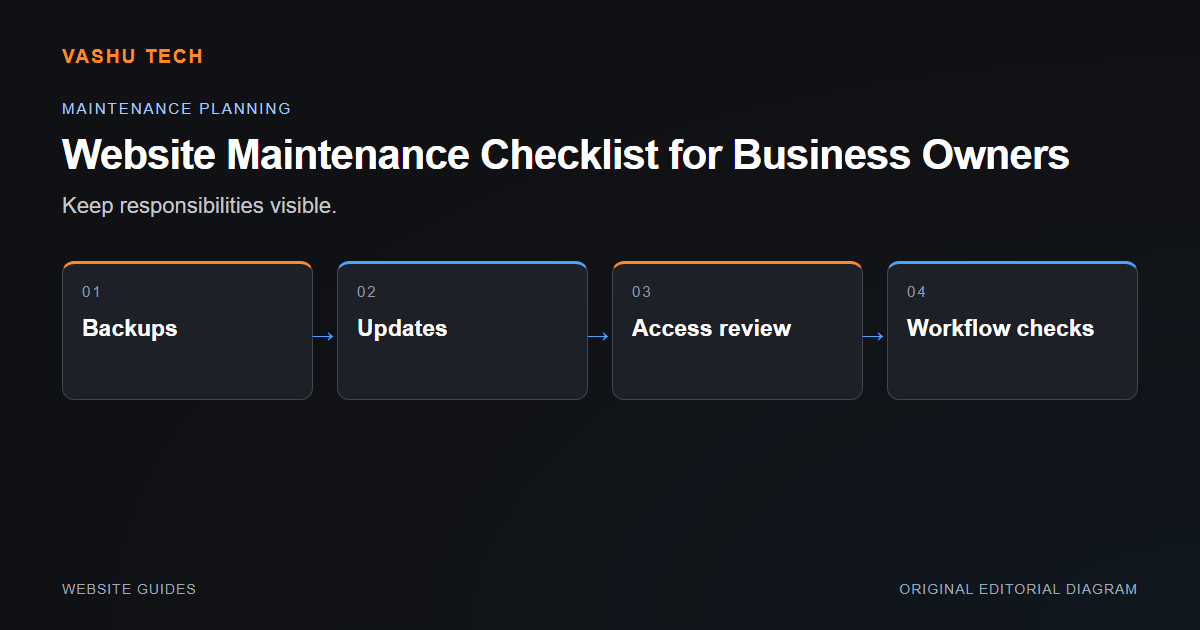
Website maintenance needs clear ownership after launch. Updates, backups, domain and certificate renewal, content accuracy and key workflow checks should not depend on someone noticing a visible failure. A checklist is useful when it identifies who performs each task and how a problem is escalated.
Review operational access
Keep business-owned accounts for hosting and external services, with appropriate staff permissions. Avoid shared passwords where role-based access is available. Review whether former suppliers still need access. Record the platform and licences so that an update does not depend on an undocumented personal account.
Verify recovery and important journeys
A backup report is not the same as a successful restore. Review database and uploaded-file coverage and test restoration privately. Check forms, navigation and relevant transactions after updates. Separate routine upkeep from new functionality so the maintenance agreement remains understandable.
Example: the site loads but enquiries stop arriving
A public-page check alone may miss a notification or queue failure. Verify record persistence and delivery separately. SMTP authentication does not establish mailbox receipt, and a scheduler registration does not prove that the host is invoking it.
Project checklist
- Assign account and renewal owners
- Review updates on staging
- Check forms and essential journeys
- Verify backup restoration
- Define support and escalation boundaries