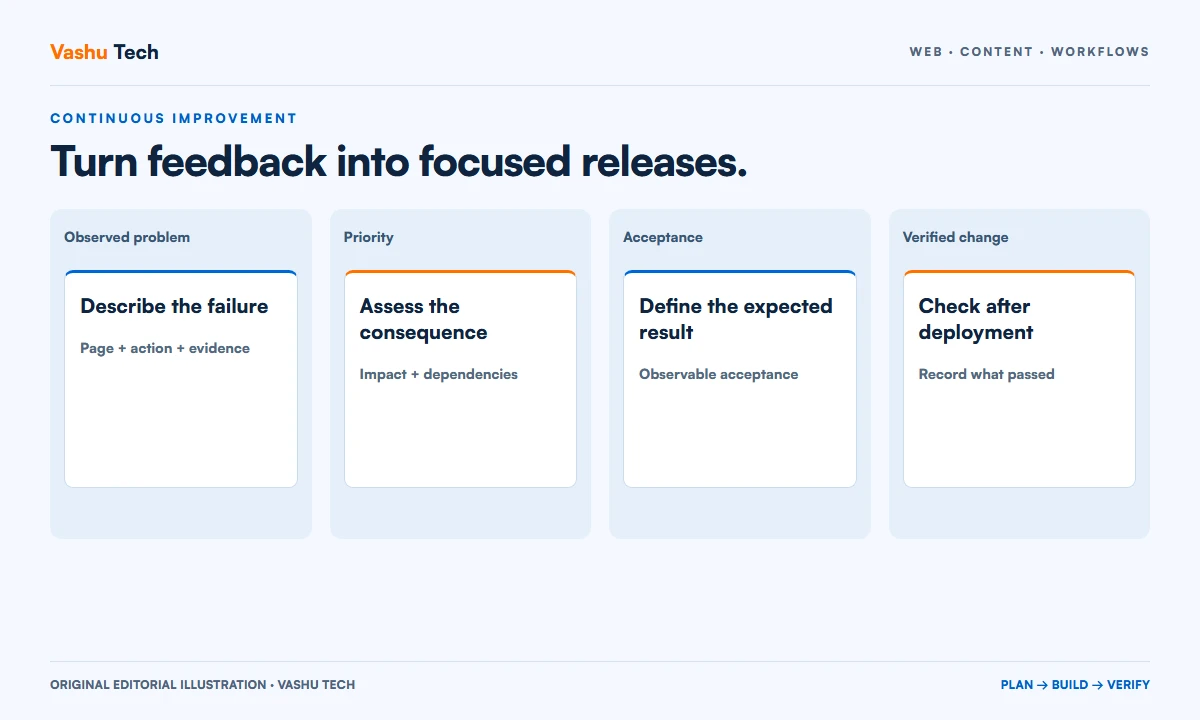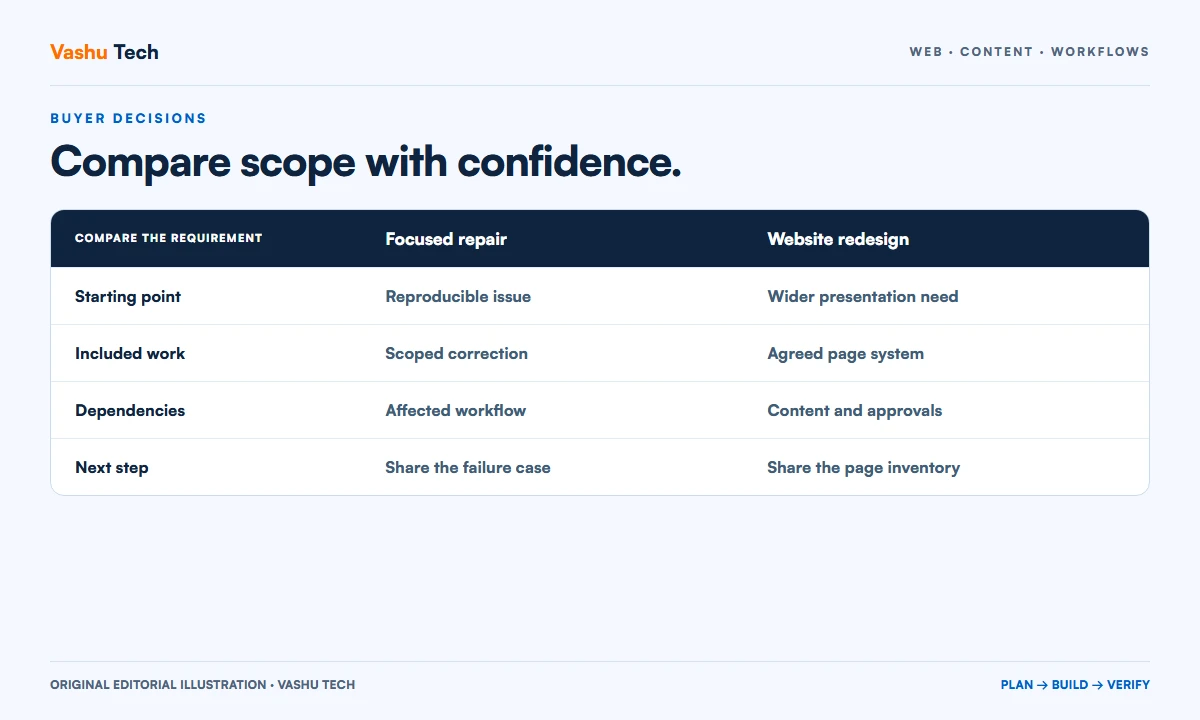
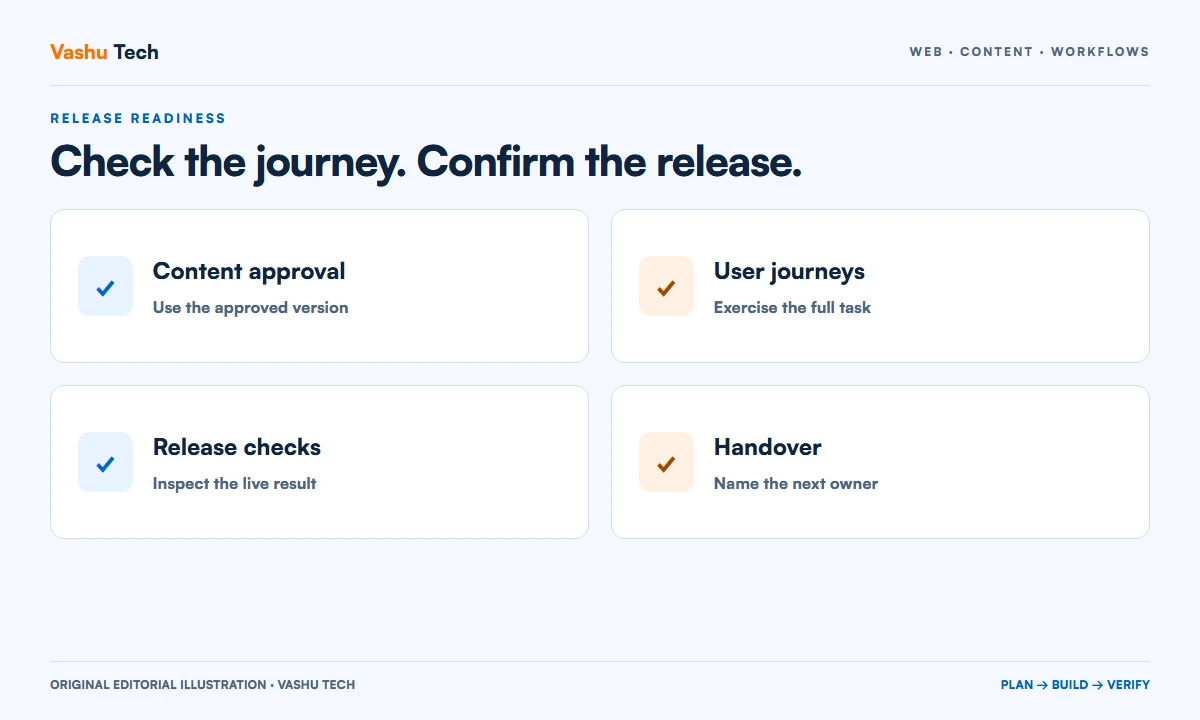
Review real customer journeys, content, enquiry routing and release responsibilities before approving a business website launch.
Check the journey that matters most
Begin launch review with the primary customer task. Can someone understand the offer, find the appropriate service and complete the intended action? Test using realistic page content and representative devices. A homepage that looks finished does not establish whether the rest of the journey works.
Write down the result and any unresolved issue. Distinguish a release blocker from a later improvement so the business can make an informed decision. Assign a person to confirm that each blocker has been resolved rather than assuming a code change proves the outcome.
Review content on the actual pages
Confirm service names, contact information, coverage statements and approved images in the published layout. Long headings, empty descriptions and inconsistent calls to action can appear only after real content replaces samples. Check important navigation links and the routes into contact or quote forms.
Remove placeholder text and unapproved claims. Verify that testimonials, client names and numerical results have a factual basis and permission where needed. The final review should reflect what visitors will read, including smaller screen layouts and error messages.
Test enquiries through to receipt
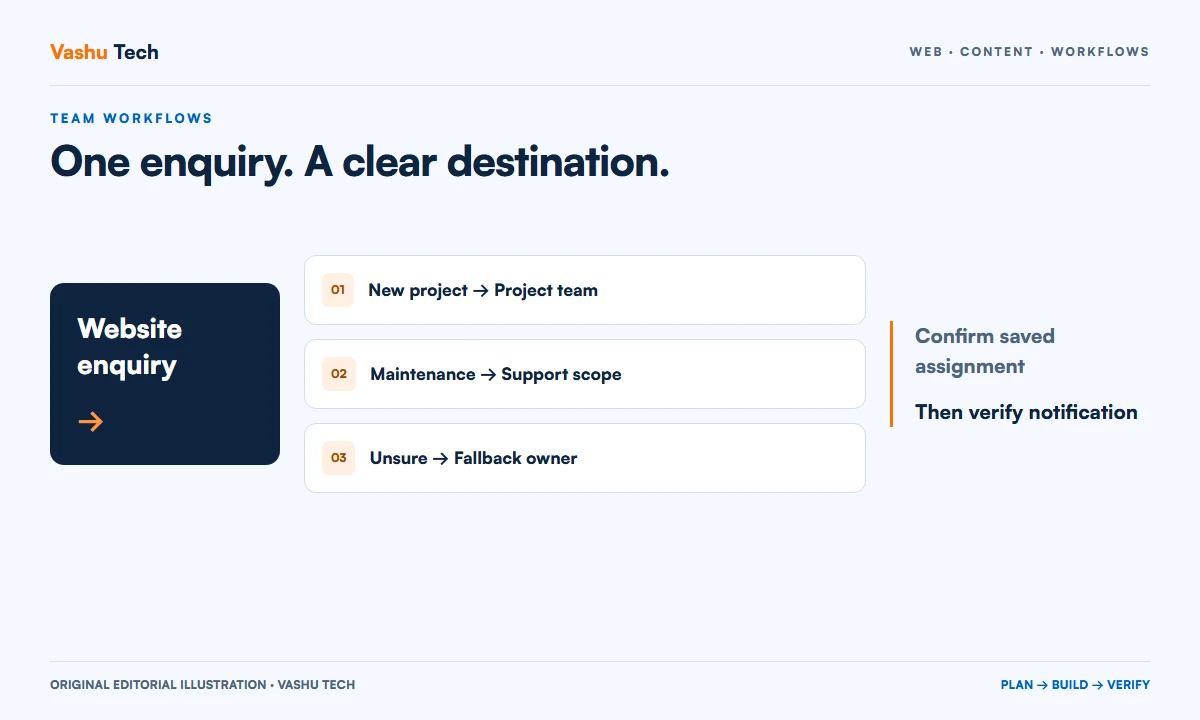
Submit controlled examples through the real application path. Confirm acceptance, stored records, intended staff access and notification delivery separately. Include missing required information and a recoverable error. Coordinate the test so staff recognize it and do not treat it as a sales opportunity.
Avoid testing payment or external delivery workflows casually against real customers. Agree a suitable controlled method for any operation with external effects. Record which parts were actually exercised and which remain dependent on account or provider setup.
Inspect discoverability and changed addresses
Review page titles, descriptions, canonical addresses and index settings against the intended launch state. If URLs have changed, check the redirect map with representative old addresses. Confirm that private previews and administrative pages retain their intended access protection.
Search visibility is not an immediate acceptance test for a release. Technical readiness can be reviewed, but indexing and ranking are separate outcomes. Keep that distinction clear when reporting completion to stakeholders.
Name the release and recovery owners
Confirm who approves the release, who performs it and who checks the site afterward. Record the deployed version and the recovery procedure appropriate to the change. Protect current data when planning rollback, particularly if records can change while the release is in progress.
Vashu Tech can help scope launch verification around the affected functionality. Bring the primary user journeys and known dependencies so the review focuses on evidence that matters to the business rather than a generic list of checked boxes.
Explore Website Development or discuss your project with Vashu Tech.
Separate readiness from an attractive demonstration
A demonstration shows that selected screens can be presented. Launch acceptance asks whether the agreed customer and staff journeys work in the intended environment. Identify which parts were checked with real application behaviour and which were represented by mockups or sample content. This avoids treating a successful presentation as proof of a complete operational release.
Write a short readiness record with the item, owner, evidence and unresolved dependency. The record should be specific enough to support a decision. Forms checked is vague; a controlled request was saved and visible to the intended staff role is reviewable. Keep any limitations beside the result rather than hiding them in a separate conversation.
Review content ownership and approval
Confirm that the person responsible for each service has approved its public description. Check names, availability, contact details and the scope of any commercial statement. Review the actual page, including image captions and smaller text. A copied design file may not reflect later CMS edits, so acceptance should use the version visitors will encounter.
Identify placeholder or sample material explicitly. Do not publish fictional testimonials, invented statistics or unapproved client logos because a layout has space for them. Verify the purpose and rights of important assets. Content gaps may change the release decision even when the technical implementation is ready.
Test the form as both visitor and receiving team
Use controlled data to test a valid request, missing required information and correction after an error. Confirm what the visitor sees while processing and after acceptance. Then inspect the stored record and the staff access path. If notification is required, verify receipt separately. A success banner cannot establish that an inbox or external tool received the request.
Agree how test entries will be recognized and handled. Avoid confusing staff or creating reports that treat test data as a real sales opportunity. For workflows with payment, messages or other external effects, use a suitable approved test process. Record the parts not exercised so the release owner understands the remaining setup.
Check old addresses and public discoverability
For an existing site, prepare representative old URLs and verify their intended outcomes after the release. Some may remain available; others may need a relevant redirect. Check navigation and links in important campaign or content entry points where they are in scope. An attractive new menu does not prevent customers from using an older saved address.
Inspect titles, descriptions, canonical addresses and intended index settings on representative page types. Keep private previews and administration protected. Search engine discovery can be prepared and inspected, but ranking is not a release acceptance criterion that a developer can promise. Report technical readiness and later search outcomes separately.
Worked example: a service-site redesign
Imagine a fictional business replacing the presentation of an established service website. Acceptance checks that the important old service addresses still reach relevant content, the primary enquiry journey works and staff can edit an approved page. The release plan also states which account owns hosting and where the recovery material is held.
A late discovery that a key form integration is unconfigured remains an open issue rather than being hidden behind a completed layout. The owner can then decide whether to resolve it before launch or agree a clearly described alternative. This example illustrates evidence-based acceptance and does not describe a specific Vashu Tech deployment.
Define a recovery plan appropriate to the change
Record what will be deployed, what is being preserved and who can restore the previous working state. If the application accepts changing records, consider how a rollback avoids overwriting new data. A copy of old files and a database recovery are different operations. The plan should reflect the actual change rather than a generic instruction to restore everything.
Verify that the person responsible has the necessary access and knows the trigger for stopping or reversing a release. Keep the recovery material outside publicly accessible paths. Document what was tested and any restoration limitation. A plan that depends on unknown credentials is not ready to support an urgent decision.
Close the release with a short operational handover
After deployment, repeat the key public and protected-path checks in the live environment. Confirm the intended version and note any remaining account, provider or business setup. A successful local test is useful evidence, but it does not replace checking the environment customers will use.
Give the business a concise account of what changed, what was checked and who owns ongoing tasks. Separate maintenance, support and future feature work. Keep an owner for unresolved items and a practical way to report a problem. This helps the release become a controlled transition into operation rather than a moment when responsibilities become unclear.
A practical review checklist
- Approve real page content, assets and business claims.
- Exercise the primary visitor journey with realistic content.
- Verify accepted requests, receiving staff access and notification separately.
- Check important old URLs and intended metadata or access settings.
- Record the deployed version, recovery responsibility and live results.
- Assign remaining provider setup, support and ongoing maintenance tasks.
Questions about putting this guide into practice
Should every small update receive a full launch audit?
No. Match the verification to the affected behaviour and material risk. A localized text correction needs a smaller check than a form, permission or deployment change. The important point is to verify the intended result and relevant neighbouring behaviour rather than repeat an expensive checklist without purpose.
Can we launch with known limitations?
The responsible owner can decide when the limitations are explicit and the agreed scope permits it. Record what is unavailable, its practical effect and who will resolve it. Do not describe a dependency as working merely because the interface that will use it is already visible.
Does the release need a live form test?
If form delivery is part of the change, a controlled test of the intended live workflow provides useful evidence. Coordinate it with the receiving team and avoid unapproved external effects. Be precise about whether storage, staff visibility and provider notification were each exercised.
Plan your next step
Discuss a scoped project with Vashu Tech. Share your current website, intended audience and the specific task you want to improve. We can review the starting point, required inputs and acceptance checks before estimating the work.