
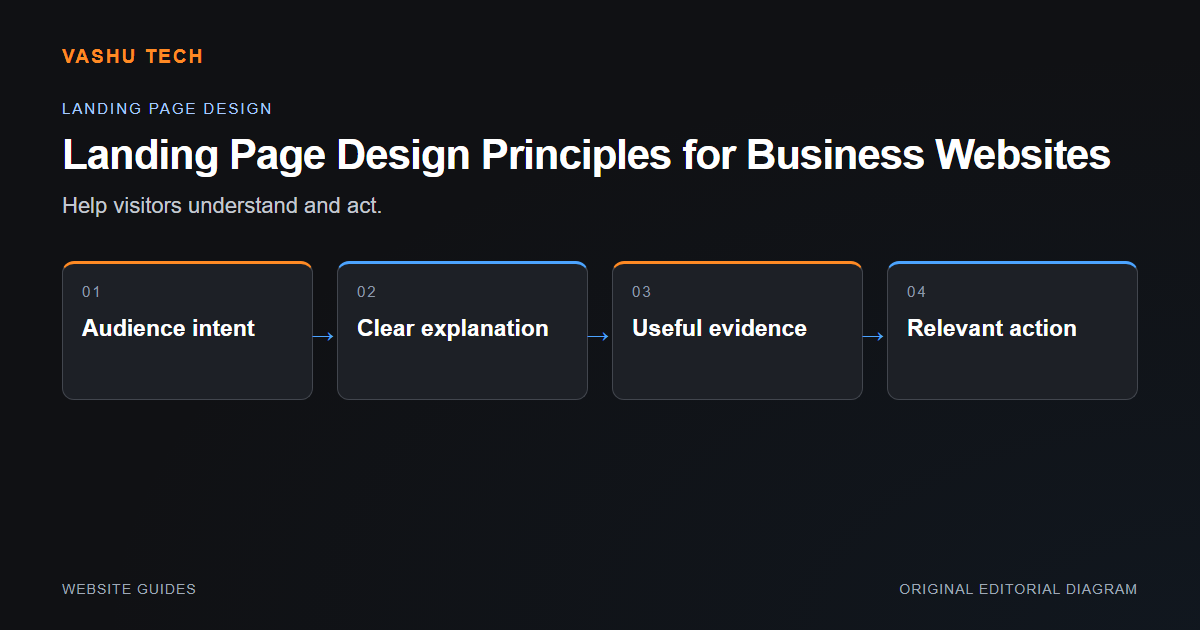
A landing page connects a specific source message with one useful next action. Its job is to explain the offer and give the visitor enough information to respond appropriately. It does not need to copy the homepage or remove every link regardless of context.
Keep the message continuous
A visitor arriving from an advertisement or email should recognize the same topic on the page. Explain who the offer is for, what work is involved and any important boundaries. A vague headline followed immediately by a form can ask for commitment before the visitor understands the reason to enquire.
Make the action usable
Forms need clear labels, useful errors and a confirmation that reflects what actually happened. Ask for information with a defined purpose and avoid collecting confidential access details. Review the journey on a phone with real content lengths. Approved tracking should measure a meaningful action without sending private form values.
Example: a redesign campaign uses a general contact page
The visitor may lose the connection to the advertised problem. A focused page can explain redesign considerations and collect the existing public URL, while retaining a route for questions that do not fit the campaign.
Project checklist
- Match the source message
- Explain scope before asking for action
- Use accessible form labels and errors
- Test mobile completion
- Measure without personal form data