
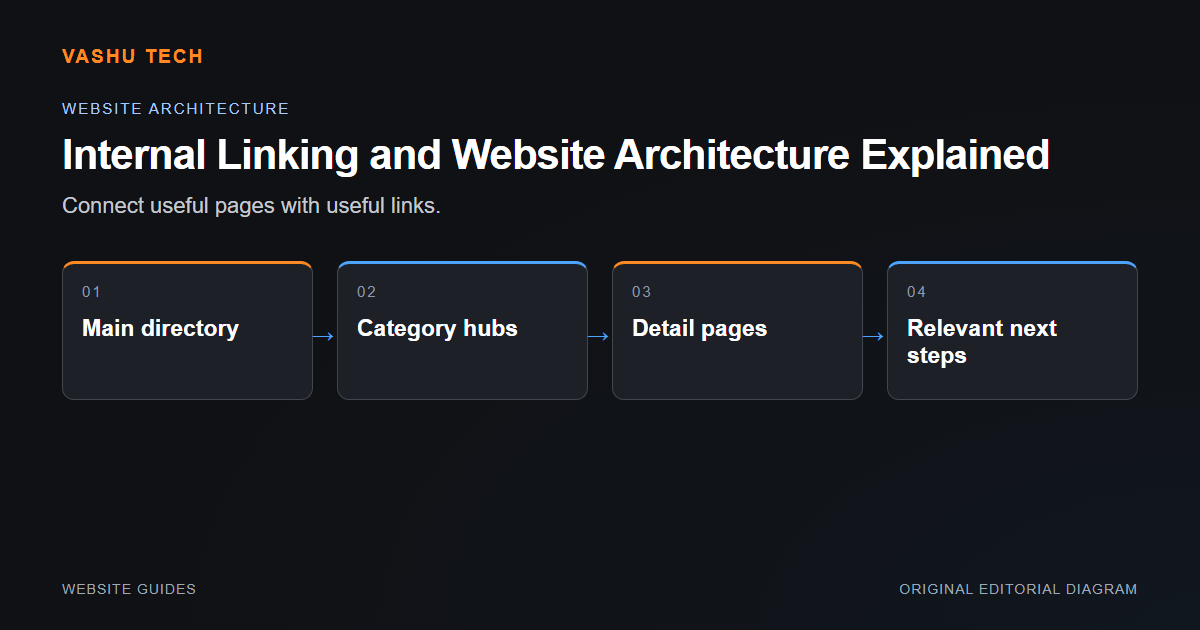
Website architecture describes how pages relate to each other. Internal links should help a visitor move from a broad need to a relevant explanation or action. More links are not automatically better. A useful structure gives each page a distinct purpose and avoids several URLs competing to answer the same question.
Map intent before adding pages
Group broad categories and identify which tasks deserve detailed pages. Keep a category page useful as an overview rather than making it a list of repeated keywords. Review overlap between service pages and educational articles: a service page explains scope, while an article can help someone understand a decision or diagnosis.
Link through meaningful relationships
Use descriptive anchors that explain the destination naturally. Navigation can expose category hubs, while individual pages link to a few relevant scopes. Do not link to drafts or planned pages that return errors. When URLs change, review both redirects and existing contextual links rather than leaving every journey dependent on an alias.
Example: technical SEO and an SEO checklist
The service page can explain investigation and deliverables. The article can provide a practical review sequence. Linking between them is useful when the article helps someone understand the problem and the service page explains how to discuss corrective work.
Project checklist
- Give each page one clear purpose
- Group related services
- Use natural descriptive anchors
- Link only to real public destinations
- Review links after URL changes