
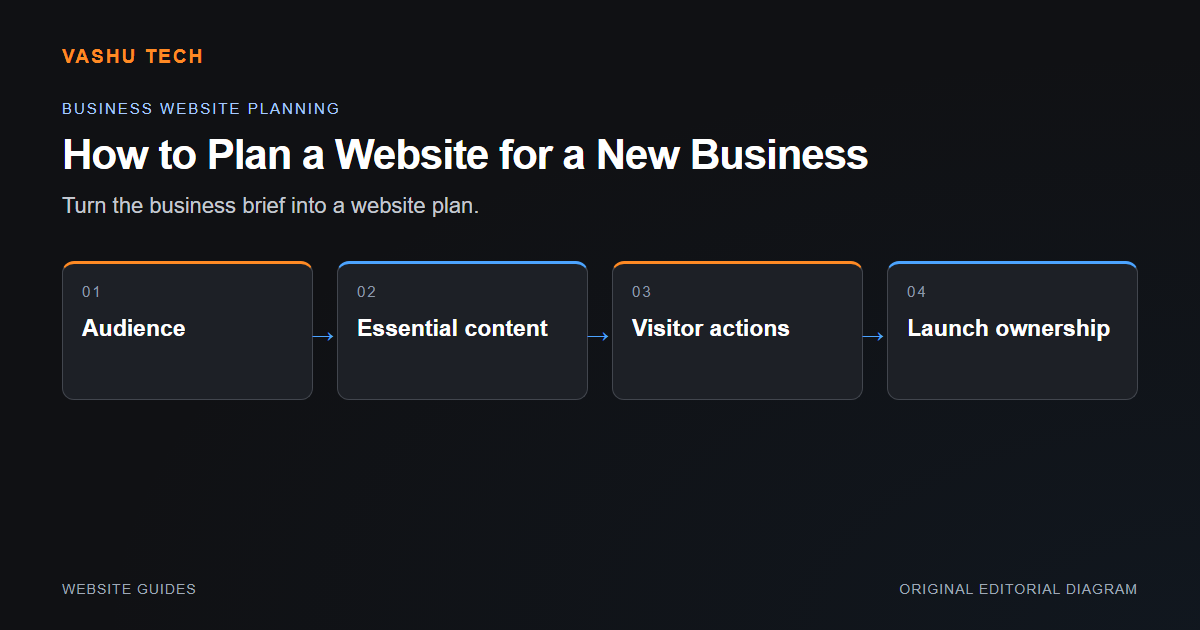
A first website needs a clear account of the business and the action a visitor should take. Start with audience questions, service information and contact routes before choosing effects or a large list of features. A useful first release can be focused without being incomplete.
Prepare accurate content and ownership
Gather the company name, contact information, logo and service scope. Identify who can approve claims and who will maintain the content. Do not invent testimonials or customer results to fill a template section. If evidence is unavailable, explain the work and its boundaries honestly.
Scope the essential journey
Decide whether visitors need to read, enquire, book or buy. Each action has different functional and operational requirements. Review platform, hosting and ongoing support responsibilities. Keep later ideas separate so that the first release can be tested against a coherent requirement rather than an expanding wishlist.
Example: a new service business wants a complex portal
A portal may be useful later, but the immediate need may be accurate service pages and a reliable enquiry flow. Define which operational problem the portal would solve before adding account management and private data to the project.
Project checklist
- Define the visitor and next action
- Prepare verified business information
- Map essential pages
- Assign content and account ownership
- Separate first-release requirements from later ideas