
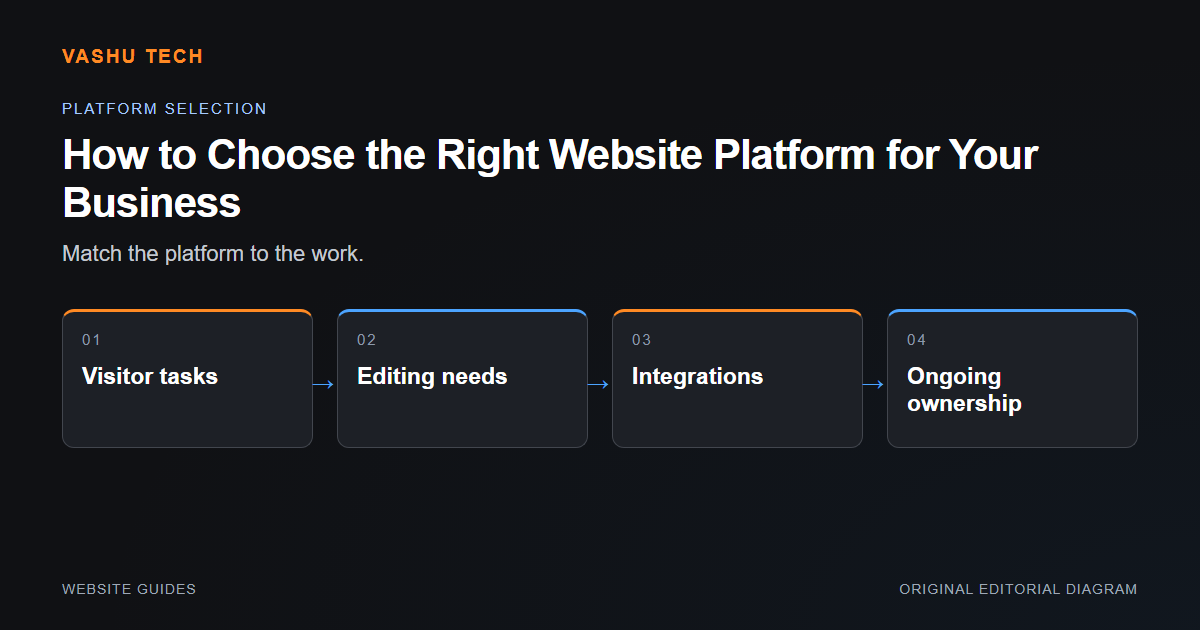
Platform choice is an operational decision as much as a design decision. Start with the tasks the website must support: publishing information, selling products, handling approvals or connecting systems. A theme demonstration shows presentation, but it does not establish whether the platform supports your editing, data and maintenance requirements.
Define who will maintain the website
A business owner editing occasional service copy has different needs from a merchandising team maintaining hundreds of product options. List recurring tasks and the permissions each role needs. Ask to see those tasks performed in the proposed editor, including correcting a mistake. An interface that looks simple in a presentation may still depend on developer help for routine changes.
Compare boundaries instead of brand names
WordPress offers a content-centered environment with themes and extensions. Shopify provides a hosted commerce platform with supported customization boundaries. A custom application can express specialized workflows but needs ongoing code and deployment ownership. None is automatically the right answer for every project. Compare the actual workflow, the supported integrations and the cost of maintaining the result.
Example: service site or order workflow?
A company publishing service information may not need a custom application. If staff must approve requests through several states with restricted records, those rules deserve a separate application review rather than being hidden in a collection of form plugins.
Project checklist
- List essential visitor and staff tasks
- Check content editing with realistic examples
- Verify integrations and account eligibility
- Separate hosting and licence costs
- Agree backups and maintenance ownership