
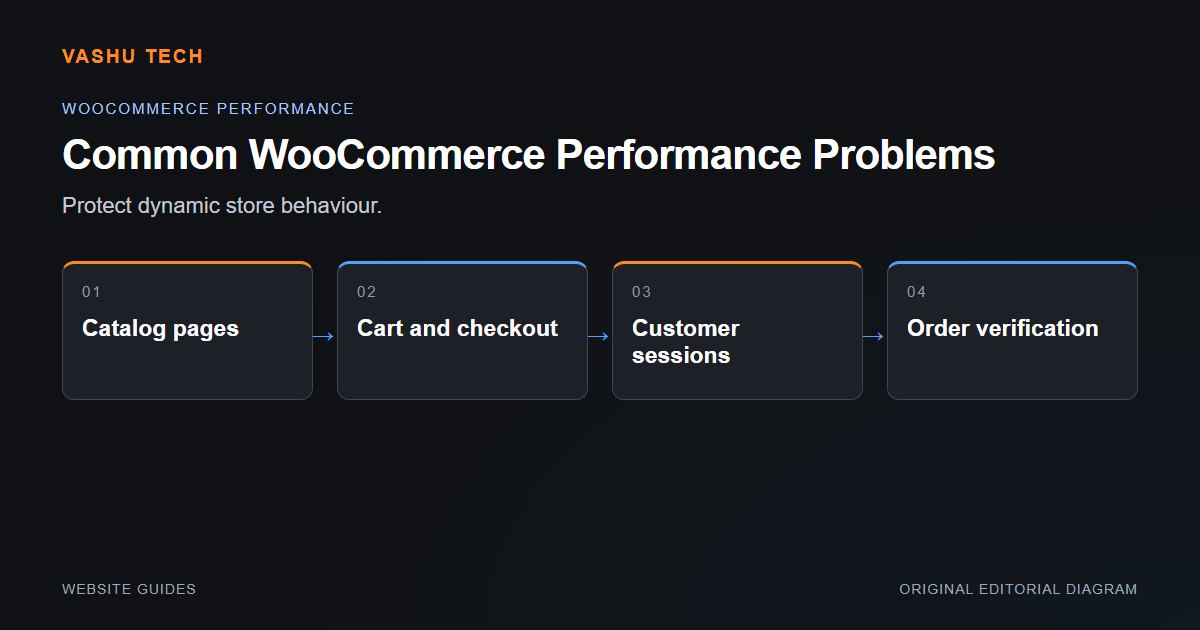
WooCommerce performance must be reviewed as both a public storefront and an operational application. Product browsing, cart state and order administration have different workloads. A fast cached page does not prove that checkout or staff tasks are performing well.
Separate storefront and transaction work
Large product images and heavy templates affect browsing, while extensions and server resources can affect dynamic requests. Review collection, product and checkout pages with representative content. Compare logged-out and relevant logged-in journeys. The goal is to identify the expensive work rather than install overlapping optimization tools without evidence.
Keep order and session boundaries intact
Personalized cart and account information should not be served from an ordinary shared page cache. Changes to extension behaviour need order-flow testing, including failed payments and stock transitions. Backups should preserve the database and files together before risky work. Do not discard old orders to make an optimization easier.
Example: product pages improve but checkout fails
A broad cache rule may hide the cost of a dynamic request while breaking session-dependent behaviour. Review the platform's supported exclusions and confirm that cart totals, selected options and order creation remain correct after cache changes.
Project checklist
- Measure product and checkout paths separately
- Review extension overhead
- Check hosting resources
- Respect cart and account cache exclusions
- Verify orders and stock after changes