Keep a B2B website project moving with clear content ownership, review stages, approval criteria and controlled changes.
Give each page a named owner
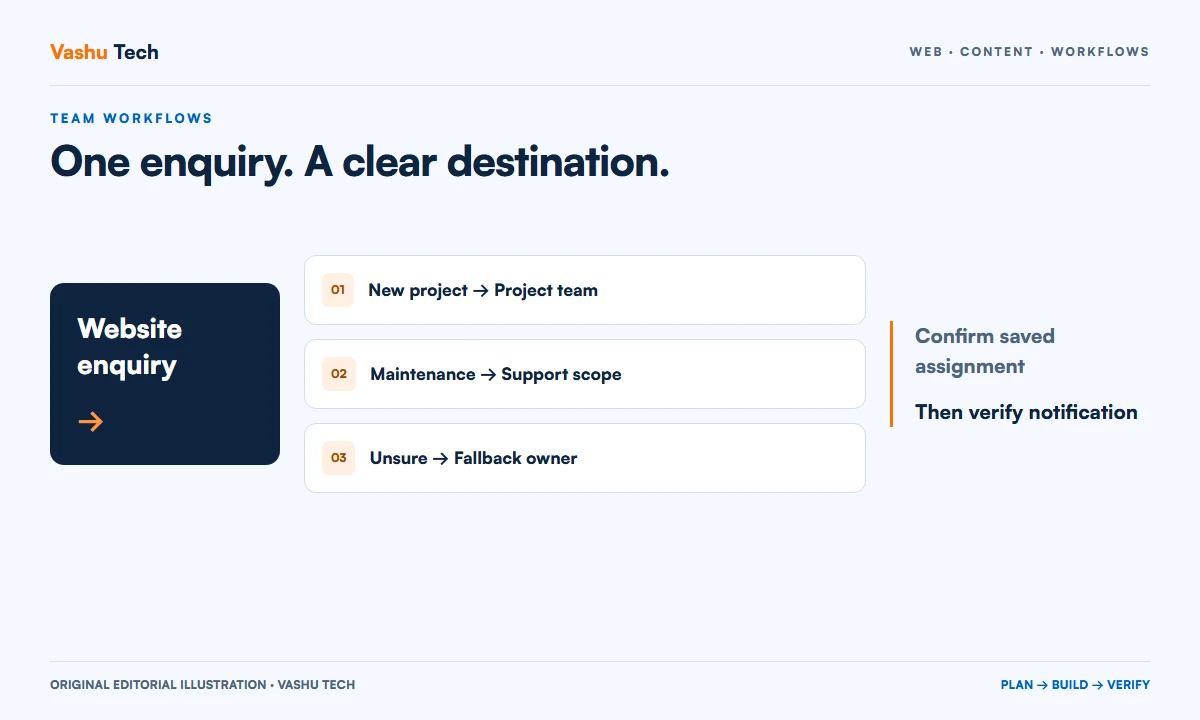
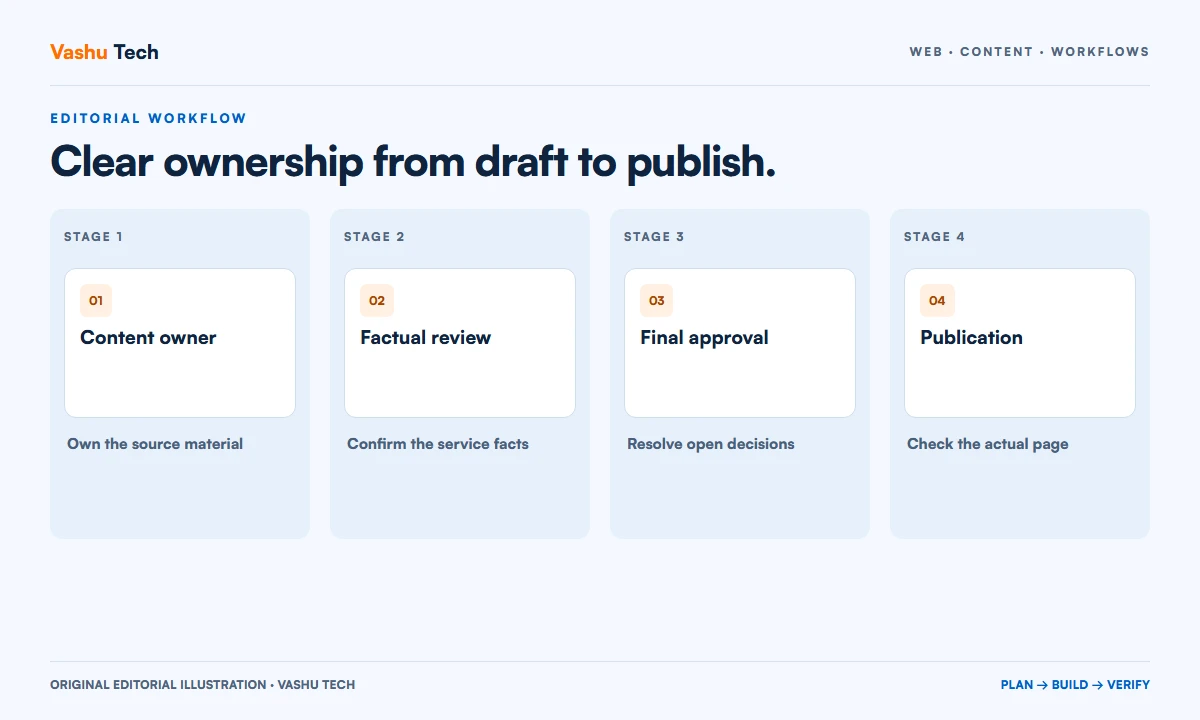
A website project can stall when everyone is invited to review and no one is responsible for deciding. Assign a content owner for each page or service group. That person coordinates input and resolves conflicting feedback. Separate the person supplying factual information from the person approving its public use when the business requires that distinction.
Start with a page inventory containing purpose, audience, source material, owner and approval state. Mark missing information visibly. This keeps the team from treating unverified statements in a design draft as final business facts.
Review meaning before polishing presentation
Approve the service description, audience and intended action before spending time refining every sentence. Ask whether a buyer can understand the problem addressed, the scope and the next step. A page may sound polished while still failing to explain what the business actually offers.
Then review tone, grammar, headings and visual fit. This sequence reduces the chance that a late factual correction forces a complete redesign. Keep essential qualifications close to the claim they explain rather than hiding them on an unrelated page.
Use consolidated feedback
Choose one place for review comments and one person to consolidate them. Conflicting messages across email, chat and a design file make it difficult to determine the approved version. Ask reviewers to explain the problem and desired outcome instead of replacing copy without context.
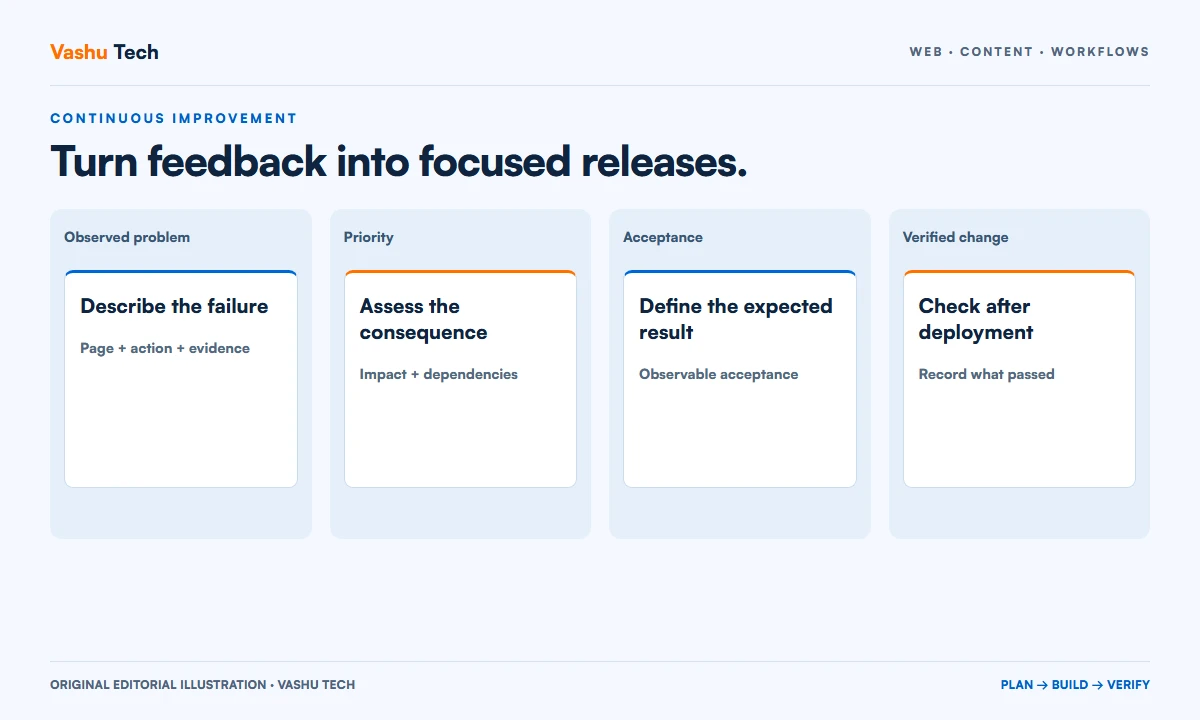
Give feedback a clear status: requested, accepted, implemented or awaiting a decision. A developer should not have to infer whether an unresolved comment blocks publication. For sensitive claims, record who approved the wording and when.
Control changes after approval
Approved copy will sometimes change. Record what changed and which pages, forms or translated versions may also need an update. If the change adds a new service or alters the intended user journey, assess its effect on scope and testing rather than treating it as a cosmetic edit.
Before launch, confirm that the CMS contains the approved version. Review real page content instead of relying only on an earlier design image. Check important names, contact routes and service availability with the responsible business owner.
Make ongoing publishing manageable
Decide who can draft, review and publish after launch. The workflow should match the size of the team: a small business may need a simple review checklist, while a larger organization may need distinct publishing permissions. Avoid adding approval stages that no one can realistically maintain.
Vashu Tech can discuss the editing and approval requirements as part of a B2B website project. Bring a representative page and an example of how it is currently reviewed; that evidence helps identify the smallest useful workflow.
Explore Business Website Development or discuss your project with Vashu Tech.
Define what each approval actually means
A factual reviewer confirms whether a service description is accurate; a brand reviewer may assess tone and consistency. A publishing approver decides whether the final version is ready for public use. Name these responsibilities rather than sending every page to an undifferentiated group of reviewers. One person may perform several roles in a small organization, but the decisions should still be clear.
For each stage, write a short set of questions. Is the service available? Are exclusions understandable? Does the page use approved terminology? Is the next action appropriate? Review criteria reduce the chance that a late subjective preference reopens a decision that has already been settled. They also give new reviewers a useful way to contribute.
Collect source material without treating it as approved copy
Existing proposals, sales decks and internal notes can help explain a service, but they may contain statements not intended for public use. Record their owner and date. Ask the responsible team to confirm any claim that will appear on the website, especially prices, availability, customer names and numerical results. Do not assume that appearance in an internal document establishes permission to publish.
Keep missing facts visible in the working draft. A clearly marked question is safer than a plausible invented answer that later survives review. Where specialist wording is required, assign the decision to the business's appropriate reviewer. Development and design teams can organize the presentation without taking ownership of professional or commercial assertions.
Use one review record and a current version
Give reviewers a shared reference for the version they are assessing. Feedback against an old attachment can conflict with a newer draft and waste implementation time. Consolidate decisions in one place and name the person who resolves disagreements. That person should be able to distinguish a request for correction from a suggestion for later improvement.
Record important decisions with enough context to explain them later. For example, a service may intentionally omit a public price because scope varies. If the reason is not recorded, a later reviewer may treat the omission as an error. A maintained decision record prevents the same discussion from recurring at every design or content review.
Decide how approved changes enter the CMS
Agree whether the content owner enters copy directly, the implementation team transfers it or both work through a controlled review. Check the page after entry because headings, links and image captions may differ from the document. The approved meaning should survive the transition into the actual layout, including mobile presentation.
If a late change affects a shared component, identify the other pages that use it. A small wording change in a navigation label or global call to action may have broader effects than editing one paragraph. Confirm the scope and review responsibility before publication, then record the result so the team can trace what was released.
Worked example: two service owners and one publisher
Consider a fictional B2B company with two service departments. Each owner confirms the facts for their own service pages. A marketing lead reviews tone and consolidates comments, while a designated publisher checks the finished CMS pages and releases them. The process uses one current draft and a short list of unresolved decisions rather than separate competing email versions.
When a department changes a service name after approval, the team reviews navigation, internal links, forms and the page heading together. They identify which changes are required now and which are separate improvements. This example illustrates ownership and dependency management; it is not evidence of a specific Vashu Tech customer workflow.
Keep approvals workable after launch
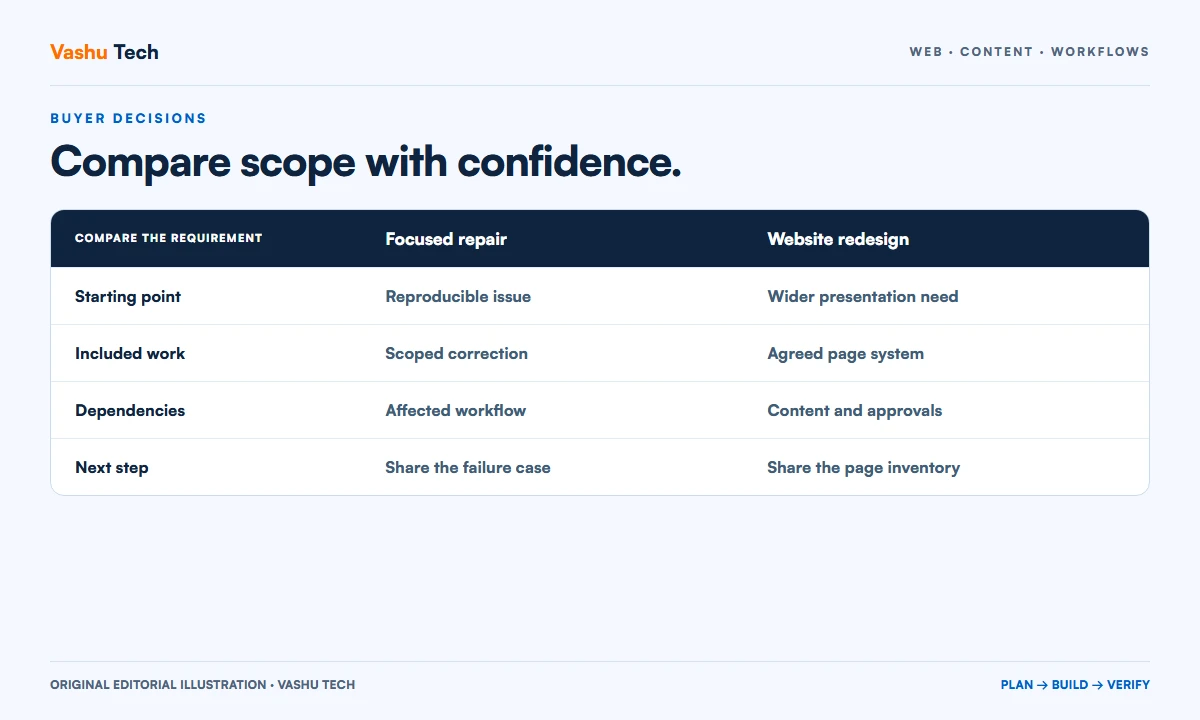
Define how ordinary corrections and major service changes are handled once the site is operating. A spelling correction may need a simpler route than introducing a new offer. The process should protect important decisions without making every small update wait for a committee. Match the review stages to the consequence of the change.
Review the workflow when staffing or responsibilities change. Remove outdated approval assumptions and make sure the current owner can access the editing tools. Track pages that have no owner or have not been checked after a service change. A publishing process is useful only while it reflects the people and operations responsible for the content.
A practical review checklist
- Assign factual, editorial and publishing decisions to named owners.
- Identify the source and approval status of each important business claim.
- Keep one current draft and one consolidated feedback record.
- Record unresolved questions and the person responsible for each answer.
- Check the actual CMS page after approved copy is transferred.
- Define a practical route for future corrections and service changes.
Questions about putting this guide into practice
Does a small team need a formal approval system?
A small team may only need a clear owner, a current draft and a short checklist. The purpose is to remove uncertainty, not add administrative work. More complex permissions or approval stages should follow a real operational requirement.
Who should resolve conflicting feedback?
Choose a business owner with authority over the page's purpose and claims. The implementation team can explain technical or design consequences, but it should not guess which stakeholder's business decision takes precedence. Record the final decision so everyone reviews the same outcome.
Should approved copy ever change during development?
Yes, when a correction or new requirement is necessary. Record the change and assess its effect on related pages, layout and acceptance checks. Updating the approved reference is important; otherwise the team may implement one version while reviewers continue to assess another.
Plan your next step
Discuss a scoped project with Vashu Tech. Share your current website, intended audience and the specific task you want to improve. We can review the starting point, required inputs and acceptance checks before estimating the work.