
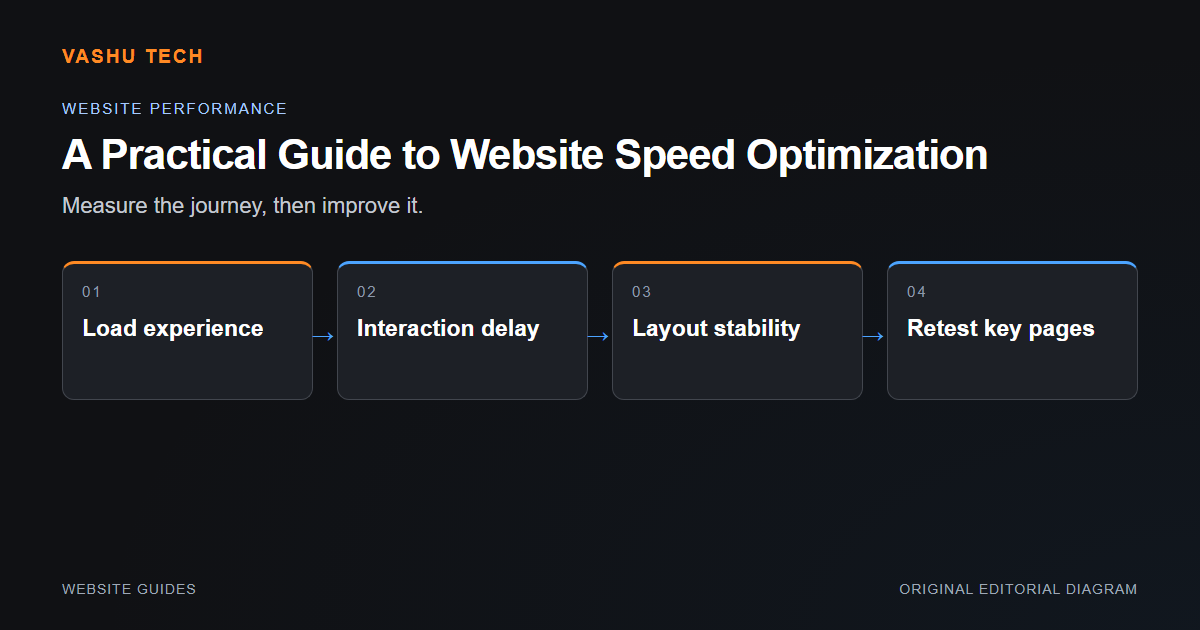
Speed work should begin with an observed delay and a repeatable measurement. A homepage score is not a complete assessment of a website. Review the pages visitors actually use and distinguish server response, asset delivery, rendering and interaction problems before choosing an optimization.
Locate the bottleneck
Large images may delay visible content, while unnecessary scripts can delay interaction after the page appears. Slow server operations need a different response from oversized media. Compare measurements under similar device and network conditions. Record the tested page and important visual or functional states so that an apparent improvement can be verified.
Protect dynamic behaviour
Caching and asset changes can create regressions if they ignore sessions, forms or account pages. Do not cache private responses like public content. Check that resized images remain readable and that deferred scripts still support required interactions. A performance change is successful only if the intended journey continues to work.
Example: a fast homepage and slow search
The homepage may be cached while a search request performs expensive database work. Compressing the homepage banner will not solve that query. Inspect the search workload and use representative records before deciding whether indexes, query changes or infrastructure are needed.
Project checklist
- Measure representative pages
- Separate asset and server problems
- Review third-party scripts
- Respect private and dynamic cache boundaries
- Compare functionality as well as timing