
Requirements first
Broad template edits can disrupt product pages or make future theme upgrades difficult to merge.
Shopify theme customization changes a supported theme to fit a store's design or merchandising requirement. It may involve Liquid templates, sections, snippets and storefront scripts. This service is useful when a theme is a sound foundation but does not display particular information or interactions correctly. The work should remain understandable to the merchant and be reviewed against theme updates.
A clear scope, practical review points and communication around your actual requirements.
Broad template edits can disrupt product pages or make future theme upgrades difficult to merge.
For Shopify Theme Customization, agree content ownership, access, approvals and the person who handles questions throughout the project.
Theme updates do not automatically preserve every custom edit. Maintain a record of changes and review app-injected code. Work on a duplicate theme before making it live.
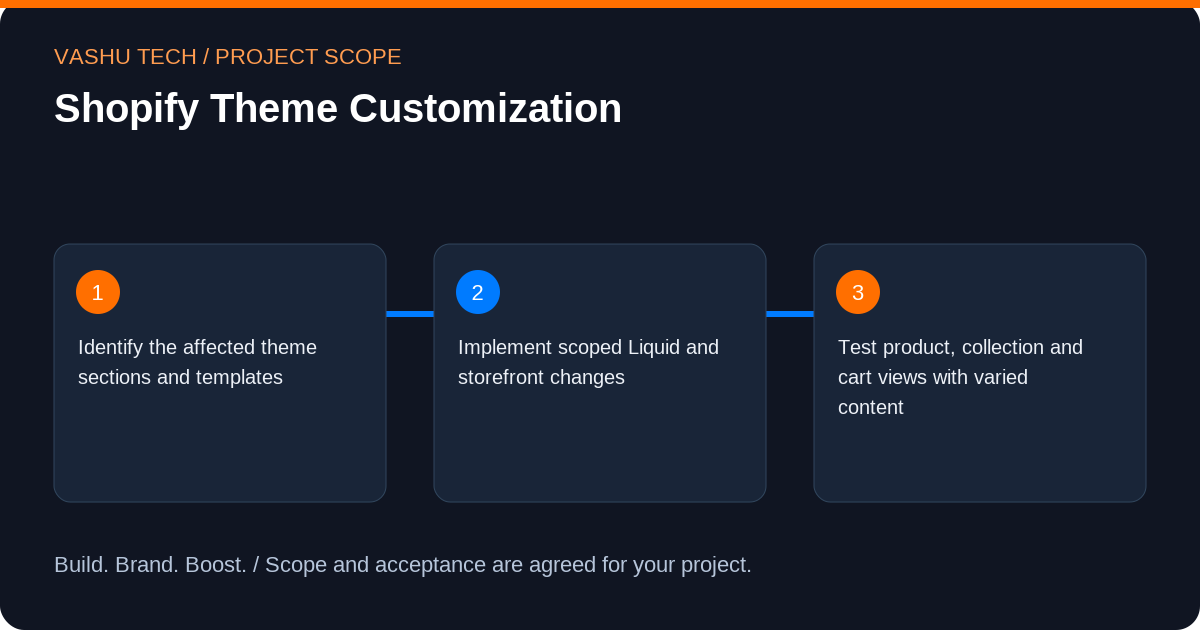
Use the Shopify Theme Customization tasks as acceptance criteria: Identify the affected theme sections and templates; Implement scoped Liquid and storefront changes; Test product, collection and cart views with varied content.
Choose the work relevant to your starting point. Final deliverables are agreed in your proposal.
For Shopify Theme Customization, this stage covers identify the affected theme sections and templates. Agree the necessary inputs, intended output and review criteria before work starts.
For Shopify Theme Customization, this stage covers implement scoped Liquid and storefront changes. Agree the necessary inputs, intended output and review criteria before work starts.
For Shopify Theme Customization, this stage covers test product, collection and cart views with varied content. Agree the necessary inputs, intended output and review criteria before work starts.
Broad template edits can disrupt product pages or make future theme upgrades difficult to merge.
Theme updates do not automatically preserve every custom edit. Maintain a record of changes and review app-injected code. Work on a duplicate theme before making it live.
Check the agreed Shopify Theme Customization scope against representative examples. Confirm what is delivered, who maintains it and which follow-up tasks are separate.
Five practical stages from initial brief to reviewed handover.
Share the current situation, priority audience and the issue this Shopify Theme Customization work should address.
Confirm identify the affected theme sections and templates, required inputs, dependencies and the agreed review points.
Carry out the approved scope, including implement scoped Liquid and storefront changes, with changes reviewed against the brief.
Review product information, variants, cart behaviour, checkout and order responsibilities relevant to the agreed store scope.
Confirm acceptance of the Shopify Theme Customization deliverables, ownership, documentation and any separately agreed ongoing support.
Confirm the included outputs before implementation; optional work is identified separately.
A written Shopify Theme Customization brief covering the audience, current situation and priority: broad template edits can disrupt product pages or make future theme upgrades difficult to merge.
Identify the affected theme sections and templates; Implement scoped Liquid and storefront changes; Test product, collection and cart views with varied content.
Review product information, variants, cart behaviour, checkout and order responsibilities relevant to the agreed store scope.
Theme updates do not automatically preserve every custom edit. Maintain a record of changes and review app-injected code. Work on a duplicate theme before making it live.
Check the agreed Shopify Theme Customization tasks using real or approved representative examples, including relevant failure cases.
Confirm who maintains the result, how access is handed over and which improvements or support are outside the initial Shopify Theme Customization agreement.
Choose the checks relevant to your Shopify Theme Customization project; no ranking or business result is promised.
Where Shopify Theme Customization affects public pages, organize accurate headings, service descriptions and useful links around the intended audience.
Review product information, variants, cart behaviour, checkout and order responsibilities relevant to the agreed store scope. Where applicable, include keyboard access, readable text and mobile interaction checks.
Agree how Shopify Theme Customization work is evaluated. Separate implementation evidence from traffic, enquiries or sales, and configure analytics only where approved.
Discuss how Shopify Theme Customization fits your audience, workflow and operational requirements.
Theme customisation targets a defined storefront limitation.
It can involve settings, Liquid or related assets.
Editing without understanding existing code can disturb unrelated features.
Record custom behaviour before planning future theme updates.
Theme versions and app blocks influence the available approach.
The changed component should behave as specified without unexpected side effects.
Existing custom code can influence the investigation effort.
Provide a page link and a concrete change example. Request a scoped quote or contact Vashu Tech about the required theme adjustment.
Separate the desired outcome from a preferred technical solution.
Identify which merchant settings already address part of the need.
List related app features that must remain.
A merchant may need specifications beside the product description.
The source fields and display rules should be agreed together.
Try representative content in the modified section.
Check empty fields and long values where relevant.
Document the settings controlling the new presentation.
Explain which changes need technical help rather than routine editing.
Avoid duplicating existing theme logic unnecessarily.
Keep custom code understandable alongside the original architecture.
Share the theme version and visible issue examples.
Identify any previous developer changes you know about.
A theme may contain an older app’s leftover markup.
Inspect that dependency before removing or reworking the affected area.
Check the reviewed theme with retained product features.
Confirm publication targets the version approved by the merchant.
Later theme releases may require customisation review.
Additional sections or interactions need a fresh change brief.
Audience, scope and coordination for Shopify Theme Customization.
Merchants extending a suitable existing Shopify theme.
Specified theme changes with preview checks and editing notes.
Answers to help you plan the scope and next steps.
Review the licensed theme and requested modification first.
Future versions can require compatibility review or reapplication.
Inspect the available controls before choosing custom development.
Use a suitable unpublished theme copy for reviewable changes.
App removal requires a separate agreed dependency review.
Provide the current behaviour and a clear desired example.
Share your starting point and priorities. We can discuss the scope, required information and acceptance checks before providing an estimate.
Start a conversation
Send your requirements to our team. Please leave out passwords and confidential access details.