
Requirements first
Confusing filters, incomplete product information and intrusive widgets can interrupt the shopping journey even when the theme loads correctly.
Shopify store optimization reviews how visitors move from collections to product selection and the available purchase flow. It can address navigation, product information, mobile interactions and unnecessary app behaviour. It is relevant when a store is technically live but difficult to browse or maintain. Recommendations should be based on observed problems and available evidence rather than assuming every visitor issue needs another app.
A clear scope, practical review points and communication around your actual requirements.
Confusing filters, incomplete product information and intrusive widgets can interrupt the shopping journey even when the theme loads correctly.
For Shopify Store Optimization, agree content ownership, access, approvals and the person who handles questions throughout the project.
A storefront change cannot guarantee more sales. Shipping, pricing, product demand and fulfilment also influence results. Review app costs and avoid collecting customer data in unnecessary tracking events.
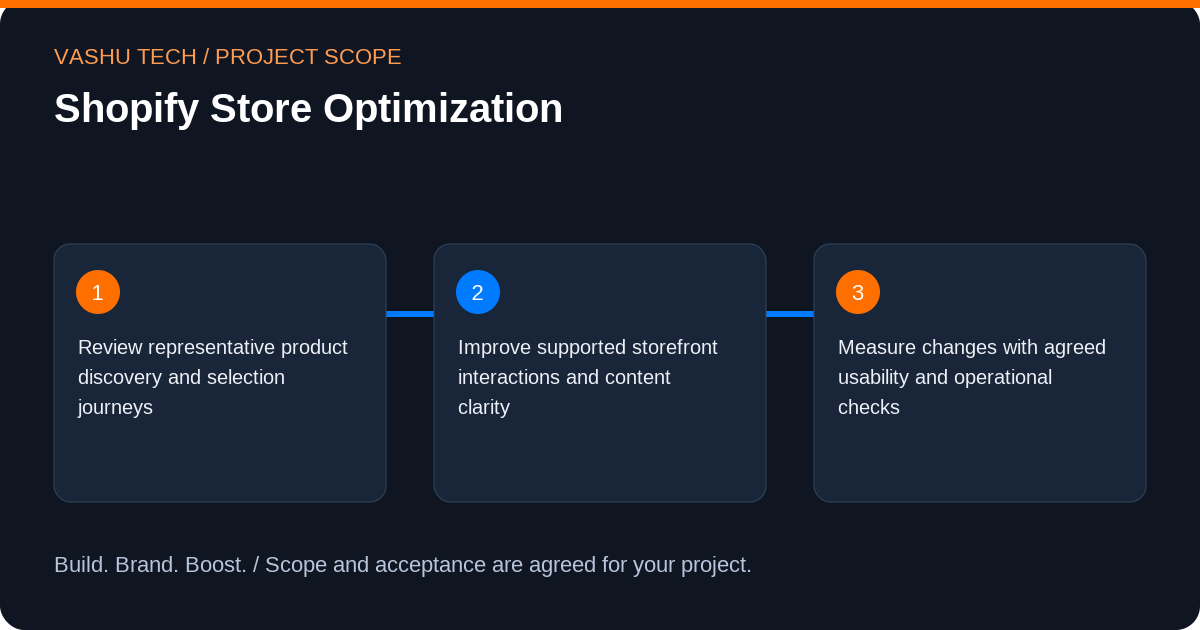
Use the Shopify Store Optimization tasks as acceptance criteria: Review representative product discovery and selection journeys; Improve supported storefront interactions and content clarity; Measure changes with agreed usability and operational checks.
Choose the work relevant to your starting point. Final deliverables are agreed in your proposal.
For Shopify Store Optimization, this stage covers review representative product discovery and selection journeys. Agree the necessary inputs, intended output and review criteria before work starts.
For Shopify Store Optimization, this stage covers improve supported storefront interactions and content clarity. Agree the necessary inputs, intended output and review criteria before work starts.
For Shopify Store Optimization, this stage covers measure changes with agreed usability and operational checks. Agree the necessary inputs, intended output and review criteria before work starts.
Confusing filters, incomplete product information and intrusive widgets can interrupt the shopping journey even when the theme loads correctly.
A storefront change cannot guarantee more sales. Shipping, pricing, product demand and fulfilment also influence results. Review app costs and avoid collecting customer data in unnecessary tracking events.
Check the agreed Shopify Store Optimization scope against representative examples. Confirm what is delivered, who maintains it and which follow-up tasks are separate.
Five practical stages from initial brief to reviewed handover.
Share the current situation, priority audience and the issue this Shopify Store Optimization work should address.
Confirm review representative product discovery and selection journeys, required inputs, dependencies and the agreed review points.
Carry out the approved scope, including improve supported storefront interactions and content clarity, with changes reviewed against the brief.
Review product information, variants, cart behaviour, checkout and order responsibilities relevant to the agreed store scope.
Confirm acceptance of the Shopify Store Optimization deliverables, ownership, documentation and any separately agreed ongoing support.
Confirm the included outputs before implementation; optional work is identified separately.
A written Shopify Store Optimization brief covering the audience, current situation and priority: confusing filters, incomplete product information and intrusive widgets can interrupt the shopping journey even when the theme loads correctly.
Review representative product discovery and selection journeys; Improve supported storefront interactions and content clarity; Measure changes with agreed usability and operational checks.
Review product information, variants, cart behaviour, checkout and order responsibilities relevant to the agreed store scope.
A storefront change cannot guarantee more sales. Shipping, pricing, product demand and fulfilment also influence results. Review app costs and avoid collecting customer data in unnecessary tracking events.
Check the agreed Shopify Store Optimization tasks using real or approved representative examples, including relevant failure cases.
Confirm who maintains the result, how access is handed over and which improvements or support are outside the initial Shopify Store Optimization agreement.
Choose the checks relevant to your Shopify Store Optimization project; no ranking or business result is promised.
Where Shopify Store Optimization affects public pages, organize accurate headings, service descriptions and useful links around the intended audience.
Review product information, variants, cart behaviour, checkout and order responsibilities relevant to the agreed store scope. Where applicable, include keyboard access, readable text and mobile interaction checks.
Agree how Shopify Store Optimization work is evaluated. Separate implementation evidence from traffic, enquiries or sales, and configure analytics only where approved.
Discuss how Shopify Store Optimization fits your audience, workflow and operational requirements.
Optimisation improves a defined part of an existing store.
The starting point should be observable shopping friction.
Broad changes without a diagnosis can leave the real obstacle untouched.
Agree whether the work includes investigation or the corrections themselves.
Theme condition and retained apps influence available remedies.
Acceptance should demonstrate the intended interaction works more clearly.
Evidence availability affects how deeply causes can be investigated.
Provide a specific page and the action causing difficulty. Request a scoped quote or contact Vashu Tech about focused Shopify improvements.
Choose the customer journey that matters first.
Separate reported facts from assumptions about lost sales.
Identify the person approving merchandising changes.
A basket may fail to explain why a quantity cannot increase.
Clear limits and feedback can address that particular confusion.
Try repeated updates and unavailable selections.
Check the resulting basket contents rather than the button appearance alone.
Explain changed merchant settings and remaining operating responsibilities.
Keep a record of observations requiring later review.
Content, layout and behaviour can contribute to the same obstacle.
Inspect their relationship before selecting a technical fix.
Share available feedback and authorised measurement evidence.
Describe relevant changes made before the difficulty appeared.
An app may add controls that conflict with native theme behaviour.
Assess that interaction before adding another workaround.
Repeat the original example on an appropriate small screen.
Record what improved and which issues remain outside scope.
Further improvements should follow new evidence and business priorities.
Sales outcomes depend on more than an individual storefront adjustment.
Audience, scope and coordination for Shopify Store Optimization.
Merchants improving an established Shopify shopping journey.
Prioritised changes and verification of the agreed store behaviour.
Answers to help you plan the scope and next steps.
No. A focused change may resolve the observed obstacle.
No. Commercial response depends on several factors beyond implementation.
Affected products, customer feedback and relevant authorised analytics help.
Include the dependencies relevant to the agreed journey.
A narrow reproducible problem can provide a useful first scope.
Repeat the agreed journey and record the resulting behaviour.
Share your starting point and priorities. We can discuss the scope, required information and acceptance checks before providing an estimate.
Start a conversation
Send your requirements to our team. Please leave out passwords and confidential access details.