
An e-commerce redesign reviews shopping tasks and store operations before changing the visual experience. Product URLs, option selection, cart behaviour and customer information can be affected by theme or platform changes. This service suits stores whose presentation no longer reflects their range or whose navigation has become difficult. The redesign plan must protect order and inventory data while improving the storefront.
Vashu Tech services
E-commerce Website Redesign
An e-commerce redesign reviews shopping tasks and store operations before changing the visual experience. Product URLs, option selection, cart behaviour and customer information can be affected by theme or platform changes. This service suits stores whose presentation no longer reflects their range or whose navigation has become difficult. The redesign plan must protect order and inventory data while improving the storefront.
Scope-ledYour requirements first
Clear estimatesBased on agreed work
Review pointsDefine acceptance checks
02
Understanding E-commerce Website Redesign
An online store combines product discovery with ordering, payments and administrative operations. Platform choice should consider the catalog, product options, delivery requirements and who will maintain the store. Shopify and WooCommerce have different hosting and customization boundaries. A storefront design does not by itself establish payment readiness or accurate stock handling. Discuss the merchant accounts and supported integrations before committing to features. Testing should cover unavailable products, failed transactions and administrative follow-up as well as a successful demonstration purchase.
03
Problems this work addresses
A new theme can introduce product or checkout regressions that are not visible on a homepage screenshot.
04
Work stages and practical deliverables
These stages describe the discussion scope for this service. The proposal should identify which outputs are included, the information required from you and any work that belongs to a separate agreement. Review points should make it possible to check the result against the original requirement.
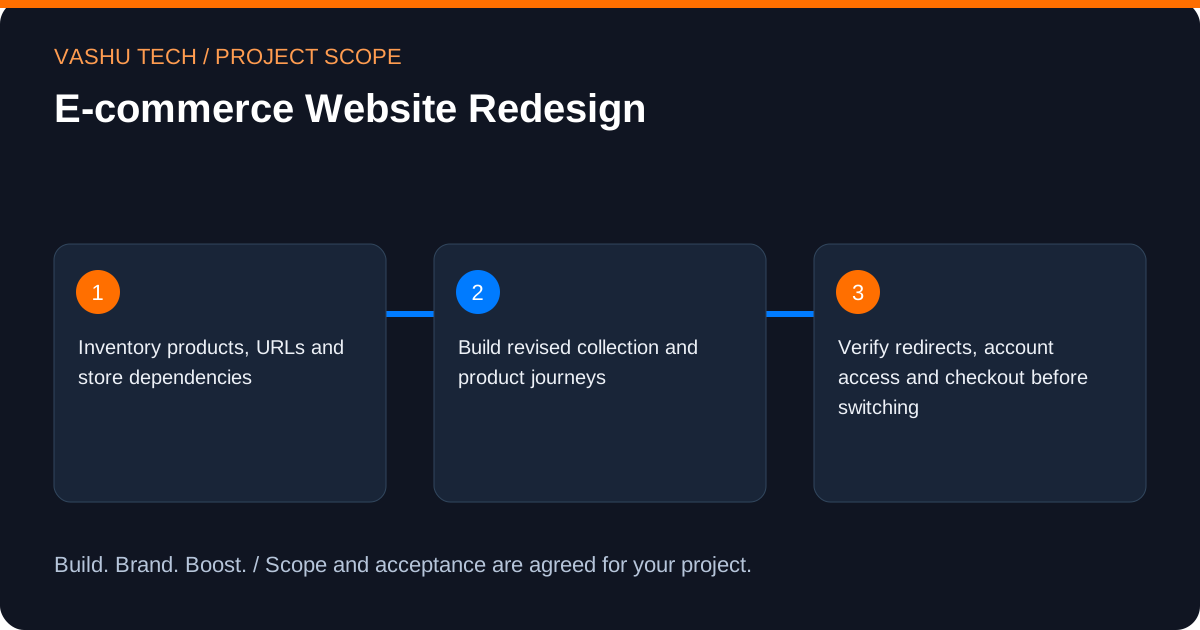
- Inventory products, URLs and store dependencies.
- Build revised collection and product journeys.
- Verify redirects, account access and checkout before switching.
05
Technical considerations and boundaries
Platform migration is a separate decision from a theme redesign. Preserve order history and map catalog data carefully if migration is required. Store policies and payment eligibility remain the merchant's responsibility.
06
Business value and acceptance
The practical value is addressing this specific difficulty: a new theme can introduce product or checkout regressions that are not visible on a homepage screenshot. A useful result makes the relevant journey or operational responsibility clearer. Define the acceptance checks around verify redirects, account access and checkout before switching, and distinguish an implemented improvement from an unverified business outcome.
07
Pricing, timing and handover
An estimate depends on the existing environment, the amount of content or data involved and the agreed testing and access requirements. External licences, hosting and vendor subscriptions should be identified separately. Share any deadline and its dependencies so that feasibility can be assessed; this page does not promise a fixed price or delivery date.
08
Discuss your e-commerce website redesign requirements
Describe the current situation and the change you need. A public website link and a short explanation are enough to begin; arrange sensitive access separately. Request a scoped quote or contact Vashu Tech to discuss the next step.
09
Plan your E-commerce Website Redesign scope
Plan the store around product selection, checkout and order handling. Product options, shipping rules, payment accounts and stock responsibilities influence the platform and integrations. Separate storefront presentation from operational readiness so a visually complete store is not mistaken for a tested ordering system.
For E-commerce Website Redesign, start by identifying the decision or workflow you want to improve. A new theme can introduce product or checkout regressions that are not visible on a homepage screenshot. Select the tasks that address that requirement; the full category of work does not have to be included in every project.
Useful starting information includes the product catalogue, options or variants, delivery requirements, existing platform and the payment or stock systems to be discussed. Public links and redacted examples are enough for an initial discussion. Account access can be arranged separately after the required permissions are understood.
10
A practical E-commerce Website Redesign planning example
Consider a retailer selling items with several options. The brief could cover how buyers select a variant, see availability and understand delivery before checkout. Staff also need an agreed way to recognize a completed order and handle a failed or interrupted payment.
Translate that example into a small, testable brief for E-commerce Website Redesign: begin with inventory products, URLs and store dependencies, identify the inputs needed to build revised collection and product journeys, and agree how to verify redirects, account access and checkout before switching. This is an illustrative planning scenario, not a client case study or a promised result.
11
Review and acceptance for E-commerce Website Redesign
Use representative products to review variant selection, unavailable stock, mobile checkout and order notifications. Where payment testing is included, use the provider-supported test flow and confirm failure handling as well as the successful path. Merchant approval, fees and supported payment methods depend on the provider.
Keep a short acceptance checklist alongside the proposal. For this scope, the review should include: Inventory products, URLs and store dependencies; Build revised collection and product journeys; Verify redirects, account access and checkout before switching. Record what was checked, which items remain open and who can approve the result. An implemented change and a business outcome are different things; neither enquiries nor sales should be assumed from a technical demonstration.
12
Handover and ongoing decisions for E-commerce Website Redesign
The handover can cover product editing, order administration and the agreed payment, shipping and inventory integrations. Clarify platform subscriptions, extension licences and who maintains product and delivery information after launch.
Before handover, agree who owns the accounts, approves public information and handles future changes. Any maintenance, additional content, third-party subscription or ongoing campaign management should be listed explicitly in the proposal. Share an essential deadline early so dependencies can be discussed before a delivery schedule is agreed.
13
Planning the right fit
Audience, scope and coordination for E-commerce Website Redesign.
Who this is for
Businesses evaluating E-commerce Website Redesign for a new requirement or an existing website. A new theme can introduce product or checkout regressions that are not visible on a homepage screenshot.
Scope and deliverables
Inventory products, URLs and store dependencies Build revised collection and product journeys Verify redirects, account access and checkout before switching Scope, exclusions and acceptance evidence are agreed in the proposal.
14
Questions about E-commerce Website Redesign
Answers to help you plan the scope and next steps.
Can the redesign preserve existing orders?
That should be an explicit requirement. A theme redesign normally should not delete order records; a platform migration needs a separate data plan.
What should I share for a E-commerce Website Redesign enquiry?
Include the affected website or proposed project, the audience and the outcome you need. For this work, useful discussion points include inventory products, urls and store dependencies, build revised collection and product journeys, verify redirects, account access and checkout before switching. Do not send passwords in the public form.
What affects the cost and timing of E-commerce Website Redesign?
The amount of existing work to inspect, the agreed deliverables, access readiness and testing requirements affect the estimate. Platform migration is a separate decision from a theme redesign. Preserve order history and map catalog data carefully if migration is required. Store policies and payment eligibility remain the merchant's responsibility. Ask for a scoped proposal rather than assuming a fixed package or completion date.
How is E-commerce Website Redesign work checked?
Acceptance should reflect the actual requirement: inventory products, urls and store dependencies; build revised collection and product journeys; verify redirects, account access and checkout before switching. Check representative content and failure cases as well as the expected successful result. Agree the evidence and handover responsibilities before work begins.
What information helps scope E-commerce Website Redesign?
Bring the product catalogue, options or variants, delivery requirements, existing platform and the payment or stock systems to be discussed. Identify your priority and which tasks you need: Inventory products, URLs and store dependencies; Build revised collection and product journeys; Verify redirects, account access and checkout before switching. Share public or redacted information first; arrange sensitive access separately.
What should be agreed at the handover for E-commerce Website Redesign?
The handover can cover product editing, order administration and the agreed payment, shipping and inventory integrations. Clarify platform subscriptions, extension licences and who maintains product and delivery information after launch. Confirm account ownership, approval responsibilities and any ongoing support separately from the initial work.
Discuss your requirements
Plan your E-commerce Website Redesign project
Share your starting point and priorities. We can discuss the scope, required information and acceptance checks before providing an estimate.
Tell us about your project.
Send your requirements to our team. Please leave out passwords and confidential access details.